Herbal plaster MOQ inventory risk guide for new traditional medicine brands, importers, and cross-border e-commerce sellers. Covers tiered MOQ structure, sell-through validation, safety stock calculation, payment terms, and annual program structure that carries documentation forward across reorders.
1. Why Inventory Risk Is the Largest Hidden Cost for New Herbal Plaster Brands
New herbal plaster brands routinely run into the same trap: they fund a launch inventory based on optimistic forecasts, then discover that the working capital tied up in unsold patches is greater than the marketing budget. The discovery usually comes three months after launch, when the brand owner calculates the reorder cycle against the actual sell-through and sees the gap between the two.
Herbal plaster is a stable, long-shelf-life category, which means the brand has time to recover from a missed forecast. But stable inventory is not free inventory. Each unsold container costs the brand the unit price plus the freight plus the customs duty plus the working capital opportunity cost, and it occupies warehouse space that the brand could otherwise use for a faster-moving SKU. A herbal plaster MOQ strategy that prevents the inventory trap is the difference between a profitable launch and a working-capital crisis.
KONGDY has manufactured consumer health patches for 36 years and supplies herbal plaster MOQ programs for traditional medicine brands, TCM clinics, cross-border e-commerce sellers, and pharmacy chains. The facility is ISO 22716 GMP certified, FDA registered, and operates in-house analytical, microbiological, and stability laboratories. This guide covers the five ways a new brand can avoid inventory risk: tiered MOQ, sell-through validation, safety stock calculation, payment terms, and program structure.
2. Way 1: Tiered MOQ Structure That Matches Demand Validation
Tiered MOQ structure is the most effective inventory risk control. The tier ladder aligns the working capital commitment with the demand validation milestone.
2.1 Pilot Container at the Tier Bottom (KONGDY)
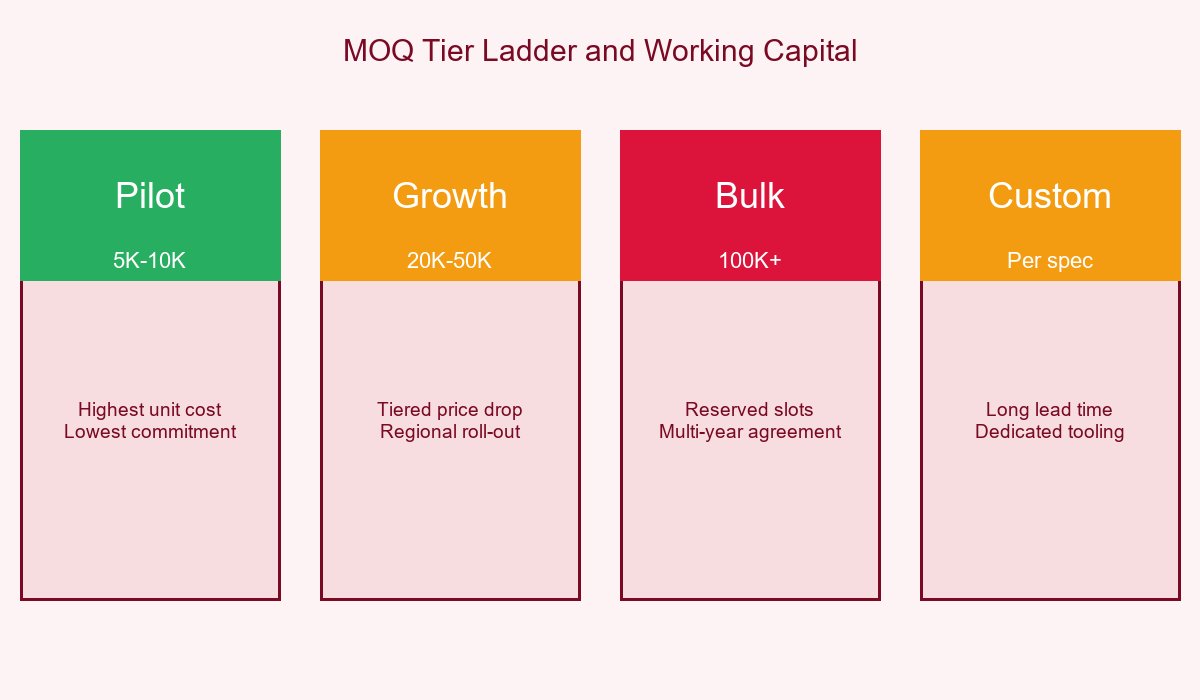
The pilot container of 5,000 to 10,000 pieces funds the launch validation without committing working capital to inventory that demand has not yet validated. KONGDY structures the pilot tier so the unit price is higher than the bulk tier but the total investment is small enough to absorb a missed forecast. The pilot container also serves as the production qualification run for the formula and packaging.
2.2 Growth Container at the Tier Middle (KONGDY)
The growth container of 20,000 to 50,000 pieces funds the regional roll-out after the pilot container's sell-through data confirms demand. KONGDY's pricing matrix documents the unit price step-down from pilot to growth, so the brand's working capital per unit improves as the reorder volume grows.
2.3 Bulk Container at the Tier Top (KONGDY)
The bulk container of 100,000 pieces or more funds the long-term supply agreement after the growth container's sell-through confirms the category. KONGDY reserves production slots for bulk-volume brands and locks the pricing tier for the multi-year supply agreement.
2.4 Tier Step-Down Mechanics (KONGDY)
KONGDY applies the tier step-down to the entire quantity, not only to the units above the threshold, so the brand receives the full benefit on the order. The pricing tier is documented in the quotation and remains stable for the quotation validity period.
3. Way 2: Sell-Through Validation Before Re-Order
Sell-through validation is the safety net for the inventory trap. The reorder decision must be triggered by sell-through data, not by the calendar.
3.1 Weekly Sell-Through Tracking (KONGDY)
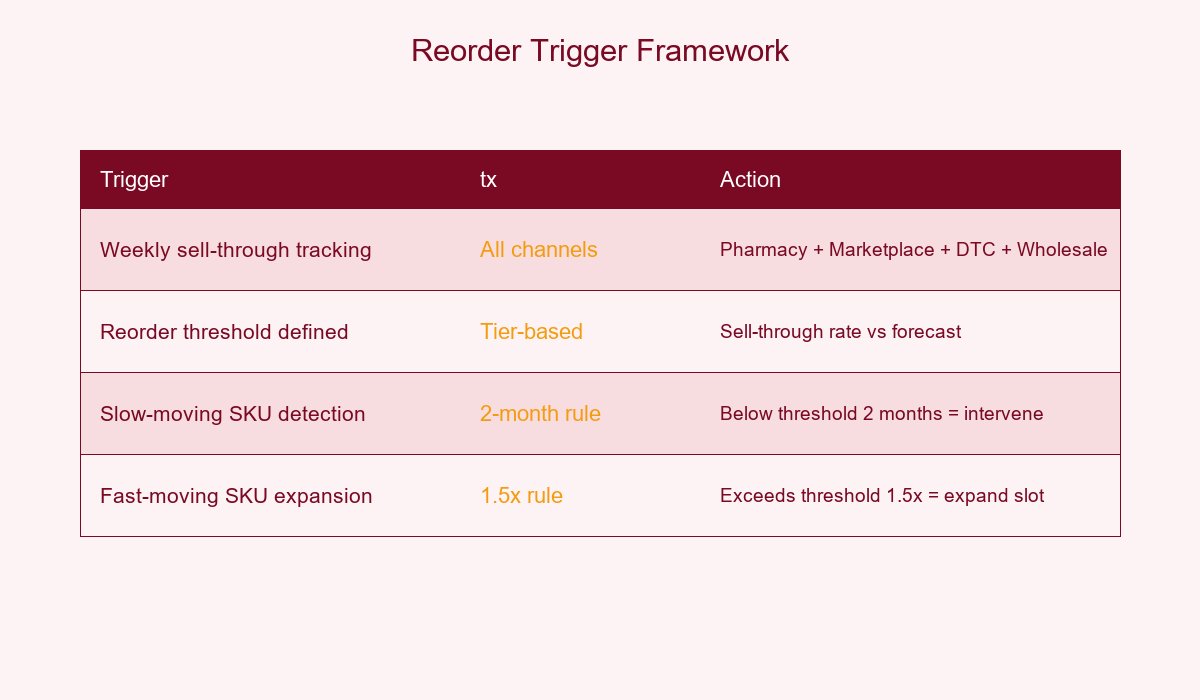
The brand tracks the weekly sell-through at each channel: pharmacy, mass retail, marketplace, DTC, and wholesale. KONGDY supports the brand with weekly inventory snapshots and reorder recommendations based on the velocity data.
3.2 Re-Order Threshold Definition (KONGDY)
The reorder threshold is the sell-through rate that triggers the next container order. KONGDY's commercial team recommends a reorder threshold based on the destination market's demand cycle and the brand's working capital cycle.
3.3 Slow-Moving SKU Detection (KONGDY)
A SKU whose sell-through is below the reorder threshold for two consecutive months is slow-moving. KONGDY supports the brand with channel-specific recommendations, including promotional support, packaging refresh, and channel rotation.
3.4 Fast-Moving SKU Expansion (KONGDY)
A SKU whose sell-through exceeds the reorder threshold by 50 percent or more is fast-moving. KONGDY supports the brand with production slot reservation, packaging capacity expansion, and multi-market roll-out recommendations.
4. Way 3: Safety Stock Calculation Based on Lead Time and Demand Variance
Safety stock is the inventory buffer that protects the brand against lead time variance and demand variance. The safety stock formula balances the cost of carrying extra inventory against the cost of a stockout.
4.1 Safety Stock Formula (KONGDY)
KONGDY's commercial team recommends a safety stock formula based on the weekly demand variance and the lead time in weeks. The formula calculates the minimum inventory level that covers a one-standard-deviation demand surge during the lead time window.
4.2 Lead Time by Tier (KONGDY)
The lead time by tier: stock herbal plaster platforms ship in 3 to 4 weeks after artwork approval, custom formulations require 8 to 12 weeks including stability work, and bulk-volume brands reserve production slots 16 weeks before the ship date. KONGDY publishes the stage-by-stage schedule with every quotation.
4.3 Demand Variance by Channel (KONGDY)
Demand variance differs by channel. Marketplace listings carry higher variance than pharmacy chains. DTC subscriptions carry lower variance than marketplace listings. KONGDY's commercial team supports the brand with channel-specific demand variance modeling.
4.4 Safety Stock by Channel (KONGDY)
The safety stock calculation produces a different buffer level per channel. KONGDY supports the brand with channel-specific reorder recommendations, so the working capital investment matches the actual demand profile per channel.
5. Way 4: Payment Terms That Match Reorder Cadence
Payment terms are the working capital lever that determines how much cash the brand commits to inventory at any given time. The right payment terms align the brand's working capital cycle with the manufacturer's production cycle.
5.1 Standard Payment Structure (KONGDY)
KONGDY's standard payment structure runs as a deposit on order confirmation with the balance against the bill of lading. The deposit percentage is documented in the quotation and remains stable for the quotation validity period.
5.2 Negotiated Payment Terms for Repeat Buyers (KONGDY)
KONGDY offers negotiated payment terms for repeat buyers with documented reorder history. The negotiated terms can include a lower deposit percentage, extended balance terms, or a quarterly payment cycle that matches the brand's working capital cycle.
5.3 Currency and Incoterm Considerations (KONGDY)
Currency volatility and freight surcharges affect the brand's working capital exposure. KONGDY offers FOB, CIF, and DDP Incoterms and a freight surcharge clause, so the brand can choose the structure that matches its logistics capability and working capital cycle.
5.4 Hedging and Quotation Validity (KONGDY)
KONGDY's quotation validity period and the hedging option for multi-year programs protect the brand from currency and freight volatility during the reorder cycle. The commercial team confirms the validity period and the hedging terms in writing.
6. Way 5: Program Structure That Carries Forward Year Over Year
The fifth way to avoid inventory risk is to structure the herbal plaster MOQ program so the documentation, the artwork, and the pricing tier carry forward year over year. A program that has to be rebuilt each cycle costs more and exposes the brand to inventory risk.
6.1 Annual Recurring Program Structure (KONGDY)
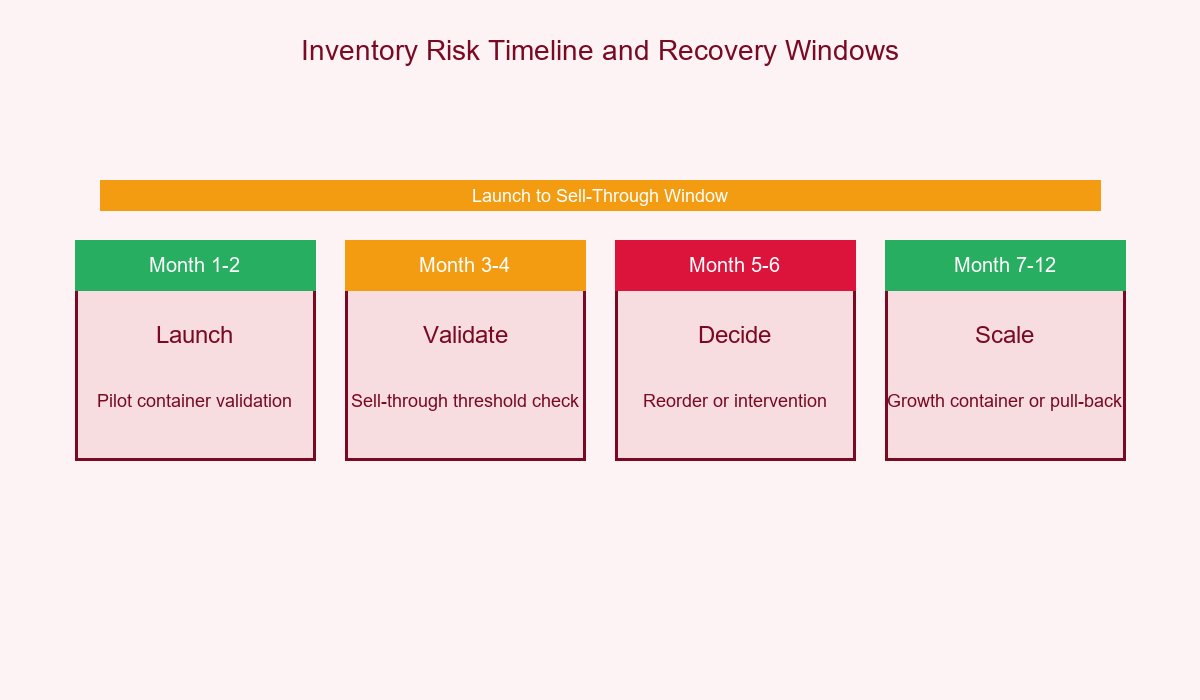
KONGDY's annual recurring program structure carries the documentation, the artwork matrix, and the pricing tier forward across reorders. The brand does not rebuild the compliance file each cycle, which saves the four-to-six week documentation cycle and reduces the per-cycle working capital commitment.
6.2 Multi-Year Supply Agreement (KONGDY)
KONGDY structures multi-year supply agreements with reserved production capacity, locked pricing tiers, and a single point of commercial contact. The multi-year agreement reduces the per-cycle negotiation cost and protects the brand from annual price increases.
6.3 Multi-SKU Range Expansion (KONGDY)
A herbal plaster MOQ program can expand into a multi-SKU range covering cooling, warming, and traditional medicine actives. KONGDY structures multi-SKU programs with shared documentation, shared artwork matrix, and shared production slots, reducing the per-SKU working capital investment.
6.4 Multi-Market Roll-Out (KONGDY)
A brand that validates demand in the lead market can roll out to additional markets with a market-specific artwork matrix and a market-specific documentation dossier. KONGDY supports the multi-market roll-out with documentation carry-forward and a single point of commercial contact.
7. Common Herbal Plaster MOQ Mistakes and How to Avoid Them
Most herbal plaster MOQ programs fail because of four predictable mistakes. The list below covers the most common ones and how KONGDY supports the brand in avoiding them.
7.1 Buying at the Bulk Tier Before Demand Validation (KONGDY)
A bulk tier order before demand validation ties up working capital in inventory that the brand has not proven the channel can absorb. KONGDY's tiered MOQ structure recommends the pilot container as the first order, with the bulk tier available after the pilot container's sell-through data confirms demand.
7.2 Underestimating Documentation and Certification Cost (KONGDY)
The documentation and certification cost is part of the MOQ budget, not a separate deliverable. KONGDY separates the documentation cost from the unit price in the quotation so the brand can budget accurately.
7.3 Choosing Custom Packaging Before Validating the Market (KONGDY)
Custom packaging and dedicated dielines are wasted if the SKU does not match the channel's best-selling configuration. KONGDY recommends launching on a stock platform with the brand's artwork and switching to custom packaging after the sell-through validates the format.
7.4 No Sell-Through Threshold Defined (KONGDY)
A reorder decision triggered by calendar rather than sell-through data can produce oversupply or stockout. KONGDY supports the brand with a documented reorder threshold based on the destination market's demand cycle.
8. Cost Breakdown: What a Herbal Plaster MOQ Container Actually Costs
The herbal plaster MOQ container cost includes unit price, packaging, certification, freight, customs, and inventory carrying cost. A clear breakdown lets the brand compare the container against the working capital available.
8.1 Unit Price and Packaging (KONGDY)
KONGDY's quotation breaks the unit price and the packaging cost into separate lines. The unit price includes material, conversion, and the share of the documentation cost. The packaging cost includes pouch, carton, artwork, and the GTIN registration.
8.2 Certification and Documentation Cost (KONGDY)
Certification and documentation include the FDA registration, the ISO 22716 certificate share, the EU CPSR preparation, the stability protocol, and the market-specific dossier preparation. KONGDY's quotation separates these lines from the unit price.
8.3 Freight, Customs, and Inland Transport (KONGDY)
Freight, customs, and inland transport depend on the Incoterm. FOB is the cheapest unit price but the highest brand-side freight cost. CIF adds freight and insurance. DDP includes customs duty and inland transport. KONGDY quotes all three structures so the brand can compare landed cost.
8.4 Inventory Carrying Cost (KONGDY)
Inventory carrying cost is the working capital cost of holding the inventory from production to sell-through. KONGDY's commercial team supports the brand with a working capital model that projects the inventory carrying cost by month.
9. Re-Order Cadence by Channel and Market
The reorder cadence depends on the destination market's demand cycle and the channel mix. A brand operating across multiple channels needs a channel-specific reorder cadence.
9.1 Pharmacy Chain Reorder Cadence (KONGDY)
Pharmacy chains reorder quarterly or semi-annually, with a multi-year supply agreement. KONGDY structures the production slot reservation around the pharmacy chain's review window.
9.2 Marketplace Reorder Cadence (KONGDY)
Marketplace channels reorder monthly or bi-weekly, depending on the SKU velocity. KONGDY supports the brand with production slot reservation and a documented lead time schedule.
9.3 DTC Subscription Reorder Cadence (KONGDY)
DTC subscriptions reorder on a fixed cadence with predictable demand. KONGDY supports the brand with quarterly production slot reservation and a documented reorder cadence.
9.4 Wholesale Distributor Reorder Cadence (KONGDY)
Wholesale distributors reorder based on their downstream demand. KONGDY supports the brand with weekly inventory snapshots and reorder recommendations based on the velocity data.
10. Conclusion: Building a Herbal Plaster MOQ Program That Avoids Inventory Risk
The herbal plaster MOQ strategy is a working capital decision, not a bargaining exercise. The right tier is the one that funds demand validation at the lowest total cost, keeps unit economics acceptable after the reorder, and preserves enough cash to market the product. A tiered structure exists so the brand can take the first step on evidence rather than on forecast, then step down unit cost as volume justifies it.
KONGDY's herbal plaster MOQ programs run under ISO 22716 GMP certification with FDA registration, EU CPSR preparation, in-house analytical, microbiological, and stability laboratories, traditional medicine sourcing capability, and documented change control. The pricing tier structure supports a pilot container through a multi-year supply agreement, and the documentation file carries forward across orders and markets.
Request a herbal plaster MOQ tier quotation within 24 hours — share your target market, expected annual volume, channel mix, and packaging direction, and the commercial team will return pilot, growth, and bulk pricing side by side with a stage-by-stage lead time schedule and the certification roadmap for your destination market.
Ask about entry-tier MOQ options for a first order by sharing your channel plan and demand assumptions, and book a factory audit or live video tour at KONGDY's ISO 22716 certified facility to review converting lines, the QC laboratory, and the stability chamber room. Brand owners planning a launch within two quarters can additionally reserve a pilot batch slot while documentation and stability work are completed in parallel, so sample approval and customs preparation finish on the same timeline.

