Pain Patch for Diabetic Neuropathy: Nerve Pain Relief Guide
Evidence-based guide to pain patches for diabetic neuropathy. Compare patch types, learn application areas, and manage diabetic nerve pain with KONGDY's expert advice.
Jun 11th,2026451 Views
Key Statistics:
37 million Americans have diabetes
60-70% develop neuropathy — Most common complication
36 years of patch expertise at KONGDY
Half of all neuropathies are diabetic in origin
Leading cause of non-traumatic amputation
TL;DR
Lidocaine patches are first-line for diabetic nerve pain
Capsicum patches provide long-term nerve pain relief
Apply patches on areas with preserved sensation only
Combine with strict blood sugar control
Daily foot care is critical for diabetic neuropathy patients
Key Takeaways
Blood sugar control is foundational: Patches treat symptoms but do not stop nerve damage—tight glycemic control is essential.
Lidocaine is the clinical gold standard: 4-5% lidocaine patches provide 12-hour numbing with minimal drug interactions.
Avoid numb skin: Diabetic neuropathy patients often have areas without sensation—never apply patches where you cannot feel them.
Capsicum offers cumulative relief: Regular use over weeks depletes substance P, reducing chronic nerve pain signaling.
Foot safety is paramount: Daily inspection prevents ulcers; patches do not replace comprehensive diabetic foot care.
Medically reviewed by the KONGDY Health Editorial Team. Last updated: 2026-06-11.
Quick Answer
Pain patches for diabetic neuropathy deliver numbing medication through the skin to overactive nerves. Lidocaine 4-5% patches are first-line, providing 12 hours of localized pain relief. Apply patches only on areas with preserved sensation—never on numb skin where injuries could go unnoticed. Combine with strict blood sugar control for best results.
Introduction
Diabetic neuropathy is the most common complication of diabetes, affecting up to 70% of patients. Pain patches for diabetic neuropathy can provide targeted relief while avoiding drug interactions common with diabetes medications.
With 36 years of transdermal patch manufacturing experience, KONGDY offers expert guidance on combining topical patches with glycemic control for comprehensive diabetic nerve pain management.
What is Diabetic Neuropathy?
Definition
Nerve damage caused by chronic high blood sugar levels:
Hyperglycemia damage — To small blood vessels supplying nerves
Metabolic disruption — Affects nerve function
Multiple nerve types — Sensory, motor, autonomic
Progressive condition — Worsens over time without control
Most common complication — Of diabetes mellitus
Types of Diabetic Neuropathy
Peripheral neuropathy — Hands and feet (most common)
Autonomic neuropathy — Internal organs
Proximal neuropathy — Hips, thighs, buttocks
Focal neuropathy — Single nerve, sudden onset
Common Symptoms
Burning feet — Especially at night
Sharp, shooting pain — In extremities
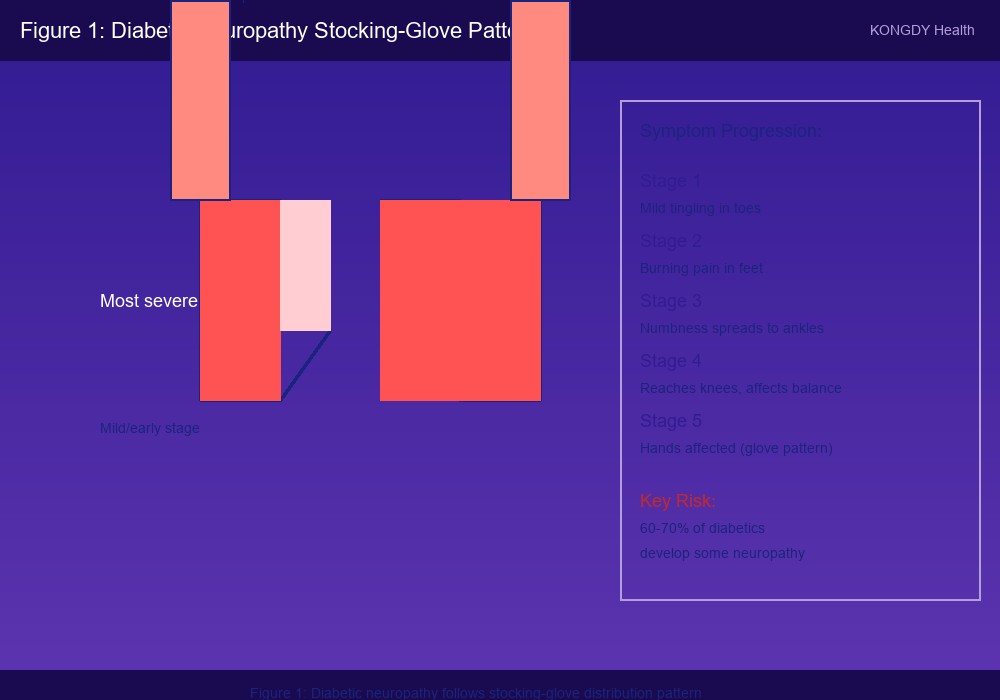
Tingling/numbness — Stocking-glove pattern
Touch sensitivity — Pain from light touch
Balance problems — From foot numbness
Foot ulcers — From unnoticed injuries
Figure 1: Diabetic peripheral neuropathy typically follows a stocking-glove distribution, affecting the longest nerves first.
Risk Factors and Prevention
Primary Risk Factors
Poor blood sugar control — HbA1c above 7% increases risk
Duration of diabetes — Risk increases over time
Age over 40 — Cumulative damage
Smoking — Reduces circulation to nerves
High blood pressure — Compounds vascular damage
High cholesterol — Affects nerve blood supply
Prevention Strategies
Tight glycemic control — HbA1c target 6.5-7%
Regular exercise — 150 minutes weekly
Healthy diet — Low glycemic, balanced
Quit smoking — Better nerve circulation
Limit alcohol — Avoids nerve toxicity
Annual foot exams — Catch problems early
How Pain Patches Help Diabetic Neuropathy
Mechanism of Action
Direct nerve numbing — Lidocaine blocks sodium channels
Substance P depletion — Capsicum reduces pain signals
Local anti-inflammatory — Diclofenac reduces nerve inflammation
Counter-irritation — Menthol distracts from pain
Why Topical Patches Are Ideal
Minimal drug interactions — Safe with diabetes meds
Targeted delivery — Direct to affected areas
Lower systemic load — Easier on kidneys
Easy to use — Apply and forget
Long-lasting — Hours of continuous relief
Pain Patch Types for Diabetic Neuropathy at a Glance
Patch Type
Active Ingredient
Strength
Relief Duration
Best For
Lidocaine
Lidocaine
4% OTC / 5% Rx
12 hours
Severe diabetic nerve pain
Capsicum
Capsaicin
0.025-0.075%
8-12 hours
Chronic diabetic neuropathy
Menthol
Menthol
3-10%
4-8 hours
Mild burning pain
Diclofenac
Diclofenac sodium
1-2%
12 hours
Inflammatory neuropathy
Herbal
Methyl salicylate, camphor
Varies
6-10 hours
Daily management
Best Patch Types for Diabetic Neuropathy
Lidocaine Patches (First-Line Choice)
Direct nerve numbing — Blocks sodium channels
4% OTC / 5% Rx — Multiple strengths available
12-hour relief — Long-lasting per application
Minimal drug interactions — Safe with diabetes meds
Best for — Severe burning, shooting pain
Capsicum (Capsaicin) Patches
Substance P depletion — Reduces nerve pain over time
Warming effect — Initially intense, then relief
8-12 hours — Long duration per patch
Cumulative benefit — 2-4 weeks for full effect
Best for — Long-term diabetic neuropathy management
Menthol Patches
Cooling sensation — Counteracts burning pain
3-10% concentration — Various strengths
4-8 hour relief — Moderate duration
Non-medication — Safe for sensitive patients
Best for — Mild burning, breakthrough pain
Diclofenac Patches
Anti-inflammatory — Reduces nerve inflammation
1-2% concentration — Topical NSAID
12-hour relief — Twice-daily application
Less systemic — Gentler on kidneys than oral NSAIDs
Best for — Inflammatory component of neuropathy
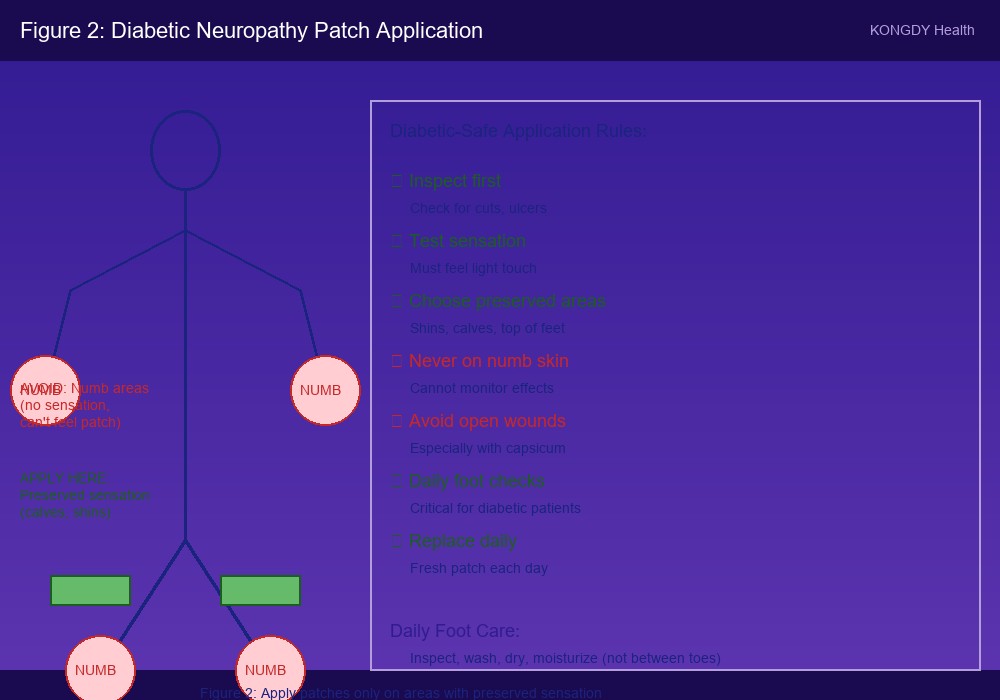
Figure 2: Apply pain patches on feet, ankles, and lower legs where sensation is preserved—avoid completely numb areas where injuries could go unnoticed.
Application Areas
Feet (Primary Site)
Top of feet — Where nerve pain is sharpest
Avoid soles if numb — Risk of unnoticed injury
Ankles — Accessible nerve area
Smaller patches — For foot contours
Lower Legs
Outer calf — Peroneal nerve path
Inner calf — Saphenous nerve distribution
Shins — Easy-to-reach area
Larger patches — For leg coverage
Hands (Less Common)
Top of hands — Easier monitoring
Inner wrists — Median nerve area
Smaller patches — Hand contours
Critical Safety Note
Inspect area first — Check for cuts, blisters, ulcers
Avoid broken skin — Especially with capsicum
Never on numb areas — Cannot monitor effects
Check daily — For skin reactions or irritation
How to Apply a Pain Patch for Diabetic Neuropathy: Step-by-Step
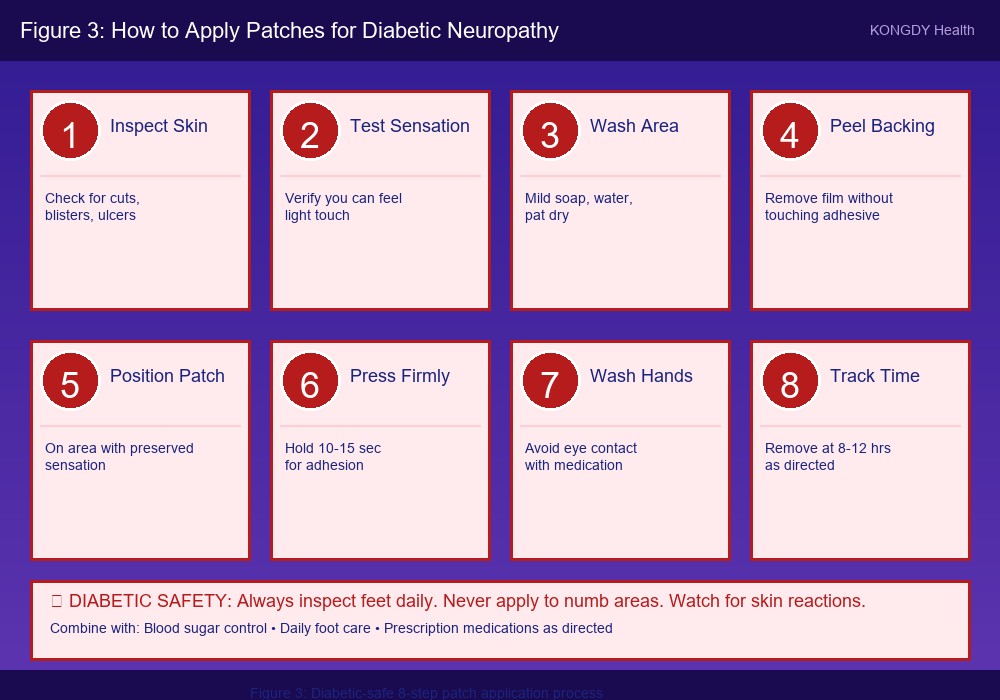
Inspect the skin — Check for cuts, blisters, ulcers, or irritation. Do not apply to broken skin.
Test sensation — Verify you can feel light touch in the application area. Avoid numb skin.
Wash the area — Use mild soap and water; pat completely dry.
Peel the backing — Remove protective film without touching the adhesive.
Position carefully — Place patch on the painful area with preserved sensation.
Press firmly — Hold for 10-15 seconds to ensure full adhesion.
Wash hands thoroughly — Especially with lidocaine or capsicum to avoid eye contact.
Note the time — Track wear duration; remove at 8-12 hours as directed.
Figure 3: Always inspect skin, test sensation, and avoid numb areas when applying patches for diabetic neuropathy.
Medication adherence — Insulin, metformin as prescribed
Diet management — Low glycemic, balanced
Regular exercise — Improves insulin sensitivity
Diabetes Medications
Metformin — Safe with topical patches
Insulin — No interaction with patches
GLP-1 agonists — Compatible with patch use
SGLT2 inhibitors — No known interactions
Oral Neuropathy Medications
Gabapentin — Common first-line for diabetic neuropathy
Pregabalin — Alternative for nerve pain
Duloxetine — SNRI approved for diabetic neuropathy
Tricyclic antidepressants — For some patients
Patches complement — Do not replace oral meds
Lifestyle Modifications
Daily foot inspection — Critical for diabetic patients
Proper footwear — Well-fitted, protective
Regular exercise — 150 minutes weekly
Healthy diet — Mediterranean or DASH
Smoking cessation — Better circulation
Limit alcohol — Avoids nerve damage
Physical Therapy
Balance training — Reduces fall risk
Strengthening — Maintains muscle function
Range of motion — Prevents stiffness
Apply patch before — May ease discomfort
Diabetic Foot Care Essentials
Daily Inspection
Check all surfaces — Top, bottom, between toes
Use mirror — For hard-to-see areas
Look for redness — Cuts, blisters, swelling
Report problems — To healthcare provider immediately
Foot Hygiene
Wash daily — With warm (not hot) water
Dry thoroughly — Especially between toes
Moisturize — But not between toes
Trim nails carefully — Straight across
Footwear
Well-fitted shoes — No rubbing or pressure
Seamless socks — Avoid friction
Never go barefoot — Even at home
Check inside shoes — Before wearing
When to See a Doctor
Warning Signs
Foot ulcers — Any break in skin
Redness or warmth — May indicate infection
Sudden pain increase — Worsening neuropathy
Color changes — Pale or blue feet
Swelling — Especially with pain
Medical Treatments
Wound care — For ulcers
Prescription medications — For severe pain
Specialist referral — Podiatrist, neurologist
Nerve testing — To monitor progression
Frequently Asked Questions
1. Which pain patch is best for diabetic neuropathy?
Lidocaine patches (4-5%) are first-line for diabetic neuropathy. They provide 12 hours of localized numbing with minimal drug interactions. For long-term management, capsicum patches reduce substance P over time. Choose based on pain severity and other medications.
2. Where should I apply a pain patch for diabetic neuropathy?
Apply patches on areas with preserved sensation—typically tops of feet, ankles, and lower legs. Avoid completely numb areas where you cannot feel the patch or where injuries could go unnoticed. Never apply to broken skin or open wounds.
3. How long should I use pain patches for diabetic neuropathy?
Pain patches can be used long-term for chronic diabetic neuropathy. Many patients use them daily for symptom management. Work with your healthcare provider to determine optimal duration and frequency, especially if you have kidney or liver issues.
4. Can pain patches cure diabetic neuropathy?
No, pain patches do not cure diabetic neuropathy. They effectively manage pain symptoms but do not reverse nerve damage. Combining patches with strict blood sugar control provides the best outcomes for long-term nerve health.
5. Are pain patches safe with diabetes medications?
Yes, topical pain patches have minimal systemic absorption and are safe with most diabetes medications including metformin, insulin, GLP-1 agonists, and SGLT2 inhibitors. They do not affect blood sugar levels.
6. Can I use pain patches with metformin?
Yes, topical pain patches have no known interaction with metformin. They can be used together safely. Metformin does not affect patch absorption or effectiveness, and patches do not impact blood sugar control.
7. When should I see a doctor for diabetic neuropathy?
See a doctor for any foot ulcer, sudden pain increase, redness or warmth, color changes in feet, or signs of infection. Also consult if pain is not controlled with current treatments or if you develop balance problems affecting daily activities.
8. Are pain patches safe during pregnancy with gestational diabetes?
Lidocaine patches are generally considered safe during pregnancy. Capsicum and menthol have less safety data. Diclofenac patches should be avoided in the third trimester. Always consult your obstetrician and endocrinologist before using any new treatments.
9. How do I know if my pain patch is working?
You should notice reduced burning, tingling, or shooting pain within 30-60 minutes of application. Relief typically lasts 8-12 hours. If no improvement occurs after several applications, consult your healthcare provider about alternative options.
10. Can pain patches replace oral neuropathy medications?
Pain patches complement but do not replace oral neuropathy medications like gabapentin or pregabalin. They provide additional localized relief. Do not stop prescribed medications without consulting your healthcare provider—abrupt discontinuation can cause serious problems.
Quick Reference: Pain Patch Selection for Diabetic Neuropathy
Your Situation
Recommended Patch
Why
Severe burning feet at night
Lidocaine 5%
Strong, immediate numbing for severe pain
Chronic daily neuropathy
Capsicum 0.075%
Long-term substance P reduction
Mild tingling discomfort
Menthol 5-10%
Cooling comfort, gentle action
With kidney concerns
Lidocaine 4% OTC
Minimal systemic absorption
Sensitive skin, elderly
Herbal patch
Gentle, fewer ingredients
Inflammatory component
Diclofenac 1%
Topical anti-inflammatory
With multiple medications
Lidocaine 4% OTC
Fewest drug interactions
About KONGDY
KONGDY Health has 36 years of experience in transdermal patch manufacturing, with specialized formulations for diabetic neuropathy that account for the unique needs of diabetic patients.