Pain relief patch MOQ 5 risk avoidance strategies for first-time buyers: staged MOQ entry, documentation pre-check, active profile market matching, reorder cadence planning, and working capital projection. MOQ tier structure with entry / launch / commercial tiers and cost-risk allocation.
1. Why Pain Relief Patch MOQ Risk Avoidance Matters for First-Time Buyers
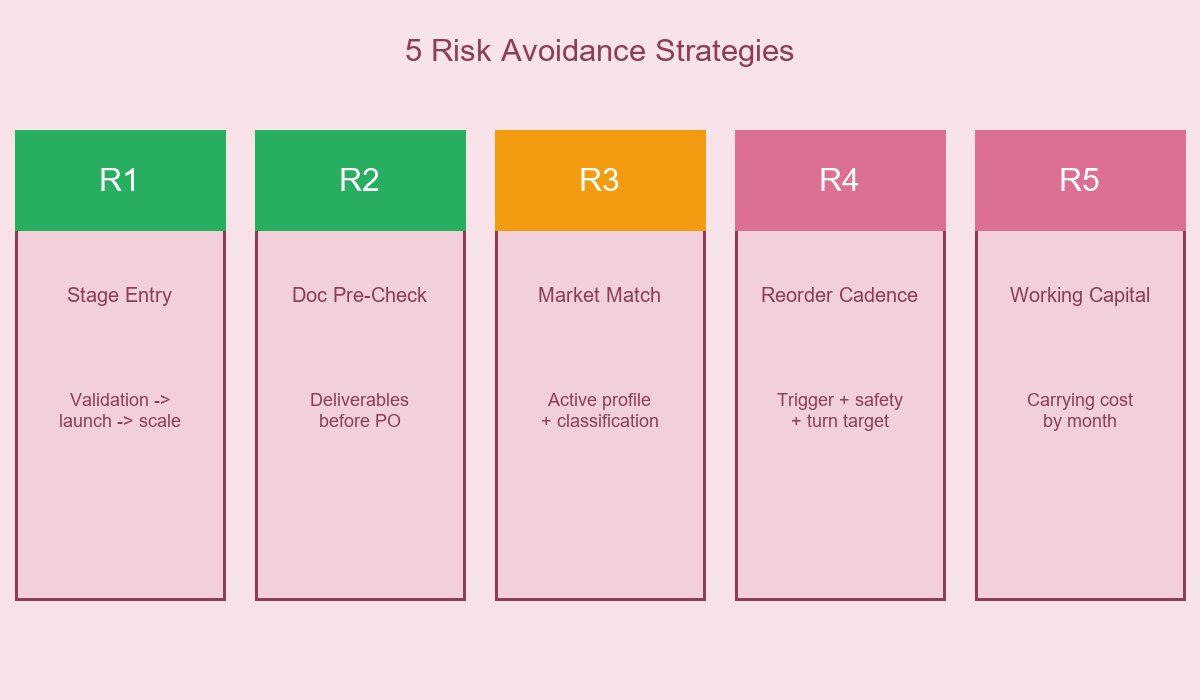
Pain relief patch MOQ decisions carry more risk than the average first-time purchase order. The active profile, the adhesive system, the destination market's regulatory scope, and the inventory commitment all have to be locked before the production run starts, and a first-time buyer who treats the MOQ as a single number absorbs the risk that a structured MOQ plan would have transferred. The five risk avoidance strategies in this guide address the active profile mismatch, the inventory over-commitment, the documentation gap, the regulatory scope mismatch, and the reorder uncertainty.
KONGDY has manufactured consumer health patches for 36 years and runs pain relief patch OEM programs for first-time buyers across North America, Europe, and Asia. The facility is ISO 22716 GMP certified, FDA registered, and operates in-house analytical, microbiological, and stability laboratories. The risk avoidance framework is built on the staged MOQ entry, the documentation pre-check, and the reorder cadence planning that keeps the first-time buyer's capital protected.
This guide walks through the five risk avoidance strategies, what each one protects, and how KONGDY's MOQ program supports the first-time buyer in applying each strategy.
2. Strategy 1: Stage the MOQ Entry Instead of Committing at Once
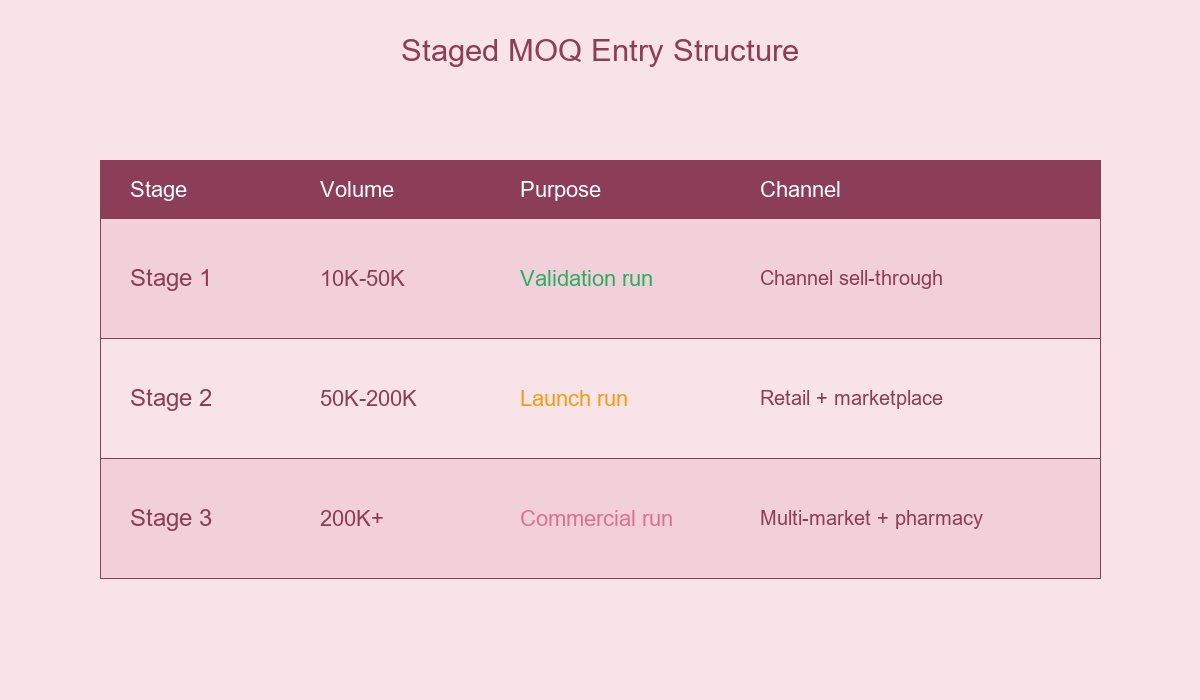
The first risk avoidance strategy is staging the MOQ entry. A first-time buyer who commits the full launch volume in the first purchase order absorbs the demand risk, the regulatory risk, and the inventory risk at once. A staged entry spreads the risk across two or three production runs.
2.1 Staged Entry Structure (KONGDY)
The staged entry structure starts with a small validation run, moves to a mid-size launch run, and scales to the full commercial run once the channel data confirms the demand. KONGDY's staged entry structure supports 10,000-piece validation runs through 100,000-piece commercial runs.
2.2 What Staging Protects (KONGDY)
Staging protects the working capital from a slow-moving first shipment and the regulatory exposure from a large production run that a destination market does not accept. KONGDY's staged structure keeps the documentation scope matched to the run size.
2.3 Staging Gate Decisions (KONGDY)
The staging gate decisions document the analytical results, the channel sell-through, and the documentation status before the next stage starts. KONGDY's gate documentation is part of the supply agreement.
3. Strategy 2: Pre-Check the Documentation Before Committing Volume
The second risk avoidance strategy is pre-checking the documentation before committing volume. A documentation gap discovered after the production run is expensive; the same gap discovered before the purchase order is a line item to fix.
3.1 Documentation Pre-Check Scope (KONGDY)
The documentation pre-check covers the ISO 22716 GMP certificate, the FDA cosmetic registration, the EU CPSR, the stability protocol, the microbiological specification, and the destination market's labelling scope. KONGDY's pre-check returns the deliverable list before the purchase order.
3.2 Regulatory Scope Confirmation (KONGDY)
The regulatory scope confirmation maps the active profile to the destination market's cosmetic or OTC monograph. KONGDY's regulatory review covers the claim language and the labelling requirement per destination market.
3.3 What the Pre-Check Protects (KONGDY)
The pre-check protects the production run from a destination market rejection and the buyer from a re-labelling cost. KONGDY's pre-check documentation is delivered before the pilot batch approval gate.
4. Strategy 3: Match the Active Profile to the Destination Market
The third risk avoidance strategy is matching the active profile to the destination market. A pain relief patch active that clears one market's cosmetic regulation may carry a different classification in another, and the MOQ committed against the wrong classification is capital tied up in inventory that cannot ship.
4.1 Active Profile Options (KONGDY)
The active profile options include menthol, camphor, methyl salicylate, capsaicin, and combination formats. KONGDY's active profile library covers the classification scope per destination market.
4.2 Market Classification Mapping (KONGDY)
The market classification mapping documents whether the active falls under the cosmetic regulation or the OTC monograph per destination market. KONGDY's mapping supports the buyer's MOQ allocation per market.
4.3 What the Matching Protects (KONGDY)
The matching protects the buyer from committing volume to a market that will not accept the classification. KONGDY's classification mapping is confirmed before the pilot batch.
5. Strategies 4-5: Plan the Reorder Cadence and Protect the Working Capital
The fourth and fifth risk avoidance strategies are planning the reorder cadence and protecting the working capital. A first-time buyer who commits to a large MOQ without a reorder cadence either runs out of stock or carries the inventory for a full year. A buyer who commits without a working capital model cannot see the carrying cost until the inventory is already on the shelf.
5.1 Strategy 4: Reorder Cadence Planning (KONGDY)
The reorder cadence planning documents the trigger level, the safety stock, the lead time, and the target inventory turn. KONGDY's commercial team supports the cadence with the channel sell-through data and the production lead time.
5.2 Strategy 5: Working Capital Projection (KONGDY)
The working capital projection models the inventory carrying cost by month against the channel sell-through. KONGDY's working capital model supports the MOQ sizing decision and the reorder trigger.
5.3 What the Planning Protects (KONGDY)
The planning protects the first-time buyer from a stock-out in the channel and from a slow-moving pallet that ties up capital. KONGDY's cadence and working capital models are documented per channel.
6. MOQ Tier Structure for First-Time Buyers
The MOQ tier structure gives the first-time buyer a documented entry point at each volume level. A buyer who understands the tier structure can match the production run size to the channel demand and the working capital availability.
6.1 Entry Tier: 10K - 50K Patches (KONGDY)
The entry tier covers 10,000 to 50,000 patches per production run, suited for the first commercial validation. KONGDY's entry tier supports the standard documentation pack and the single-market labelling configuration.
6.2 Launch Tier: 50K - 200K Patches (KONGDY)
The launch tier covers 50,000 to 200,000 patches per production run, suited for the retail and marketplace launch. KONGDY's launch tier adds the volume step-down and the multi-market artwork refresh capability.
6.3 Commercial Tier: 200K+ Patches (KONGDY)
The commercial tier covers 200,000+ patches per production run, suited for the multi-market rollout and the pharmacy chain. KONGDY's commercial tier adds the reserved production slot and the documentation roll-forward.
6.4 Tier Selection Support (KONGDY)
The tier selection support maps the channel demand, the working capital availability, and the regulatory scope to the recommended tier. KONGDY's commercial team returns the tier recommendation with the quotation.
7. Documentation Scope at Each MOQ Tier
The documentation scope scales with the MOQ tier. The entry tier covers the standard documentation pack. The commercial tier adds the multi-market documentation roll-forward and the post-market surveillance chain.
7.1 Entry Tier Documentation (KONGDY)
The entry tier documentation covers the ISO 22716 GMP certificate, the FDA cosmetic registration, the EU CPSR, the finished product CoA, the stability protocol, and the microbiological specification. KONGDY's entry tier documentation supports the single-market validation.
7.2 Launch Tier Documentation (KONGDY)
The launch tier documentation adds the multi-market dossier, the artwork refresh without tooling change, and the per-market stability roll-forward. KONGDY's launch tier documentation supports the multi-market launch.
7.3 Commercial Tier Documentation (KONGDY)
The commercial tier documentation adds the multi-year supply agreement scope, the reserved production slot, the change control procedure, and the per-market documentation carry-forward. KONGDY's commercial tier documentation supports the long-term supply commitment.
8. Common First-Time Buyer MOQ Mistakes and How to Avoid Them
Most first-time buyer MOQ mistakes trace back to four predictable decisions. The list below covers the most common ones and how KONGDY supports the buyer in avoiding them.
8.1 Committing the Full Volume Upfront (KONGDY)
A first-time buyer who commits the full volume upfront absorbs the demand, regulatory, and inventory risk at once. KONGDY's staged entry structure spreads the risk across two or three production runs.
8.2 Skipping the Documentation Pre-Check (KONGDY)
A buyer who skips the documentation pre-check discovers the gap after the production run. KONGDY's pre-check returns the deliverable list before the purchase order.
8.3 Ignoring the Market Classification (KONGDY)
A buyer who ignores the market classification commits volume to a market that will not accept the active profile. KONGDY's classification mapping is confirmed before the pilot batch.
8.4 No Reorder Cadence or Working Capital Model (KONGDY)
A buyer without a reorder cadence or working capital model either runs out of stock or carries the inventory for a year. KONGDY's commercial team supports both models per channel.
9. Cost Structure and Risk Allocation
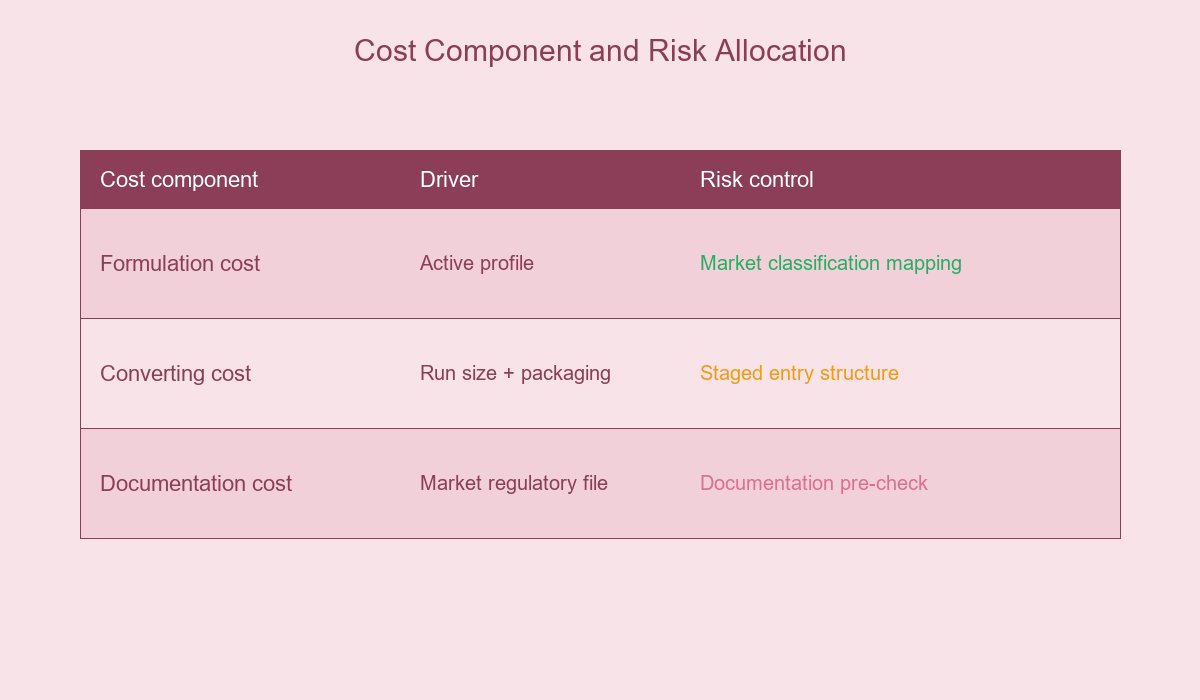
The MOQ cost structure has three components: formulation cost, converting cost, and documentation cost. The risk allocation maps each component to the decision that controls it, so the first-time buyer can see which lever protects which risk.
9.1 Formulation Cost and Active Risk (KONGDY)
The formulation cost is set by the active profile and the adhesive system, and the active risk is controlled by the market classification mapping. KONGDY's commercial team returns the formulation cost per active profile per volume tier.
9.2 Converting Cost and Volume Risk (KONGDY)
The converting cost is set by the production run size and the packaging configuration, and the volume risk is controlled by the staged entry structure. KONGDY's converting cost is documented in the quotation and locked for the duration of the program.
9.3 Documentation Cost and Regulatory Risk (KONGDY)
The documentation cost is set by the destination market's regulatory file, and the regulatory risk is controlled by the documentation pre-check. KONGDY's documentation cost is documented per destination market.
9.4 Risk Allocation Summary (KONGDY)
The risk allocation summary maps each of the five strategies to the cost component it protects. KONGDY's commercial team returns the risk allocation summary with the MOQ quotation.
10. Conclusion: MOQ Risk Avoidance as a First-Time Buyer Framework
Pain relief patch MOQ risk avoidance is a framework, not a discount negotiation. The first-time buyer who applies the five strategies captures the staged entry, the documentation pre-check, the market matching, the reorder cadence, and the working capital projection that keep the launch capital protected.
KONGDY runs pain relief patch OEM programs under ISO 22716 GMP certification with FDA registration, EU CPSR preparation, in-house analytical, microbiological, and stability laboratories, and documented change control. The MOQ program supports the first-time buyer with staged entry options, documentation pre-check, market classification mapping, reorder cadence planning, and working capital projection.
Request KONGDY's pain relief patch MOQ risk-avoidance quotation within 48 hours — share your destination market, target launch volume, channel mix, and active profile preference, and the commercial team will return the tiered unit pricing, the documentation deliverable list, the market classification mapping, and the staged entry schedule for your launch date.
Book a factory audit or live video tour at KONGDY's ISO 22716 facility to review the converting line, the analytical laboratory, and the stability chamber room, and request a free sample to validate adhesion, sensation, and first-impression in your channel. First-time buyers planning a launch within two quarters can start with a validation run while artwork and documentation work run in parallel.

