Knee pain patch MOQ 5 negotiation tactics for bulk buyers: volume commitment structure, packaging configuration, documentation scope, payment terms and currency, and price lock duration. Three-round negotiation sequence and landed economics build-up for the final commercial terms.
1. Why Knee Pain Patch MOQ Negotiation Needs Tactics, Not Discounts
Knee pain patch MOQ negotiation is rarely about a single price point. A bulk buyer who negotiates only on unit price ends up with a lower headline number and the same working capital, the same documentation scope, the same lead time, and the same reorder risk. The five negotiation tactics in this guide move the negotiation onto the levers that actually decide the landed economics: the volume commitment structure, the packaging configuration, the documentation scope, the payment terms, and the price lock duration.
KONGDY has manufactured consumer health patches for 36 years and runs knee pain patch OEM programs for bulk buyers across North America, Europe, and Asia. The facility is ISO 22716 GMP certified, FDA registered, and operates in-house analytical, microbiological, and stability laboratories, plus knee pain patch-specific large body-area adhesion testing rigs. The negotiation program is built on the documented cost structure, the tiered volume structure, and the multi-year supply agreement scope.
This guide walks through the five negotiation tactics, what each one moves, and how KONGDY's commercial team supports the buyer in applying each tactic before the purchase order.
2. Tactic 1: Negotiate the Volume Commitment Structure
The first tactic is to negotiate the volume commitment structure rather than the unit price. The commitment structure decides the volume step-down, the price lock, and the production slot reservation, and it decides the documentation scope that follows the tier.
2.1 What the Tactic Moves (KONGDY)
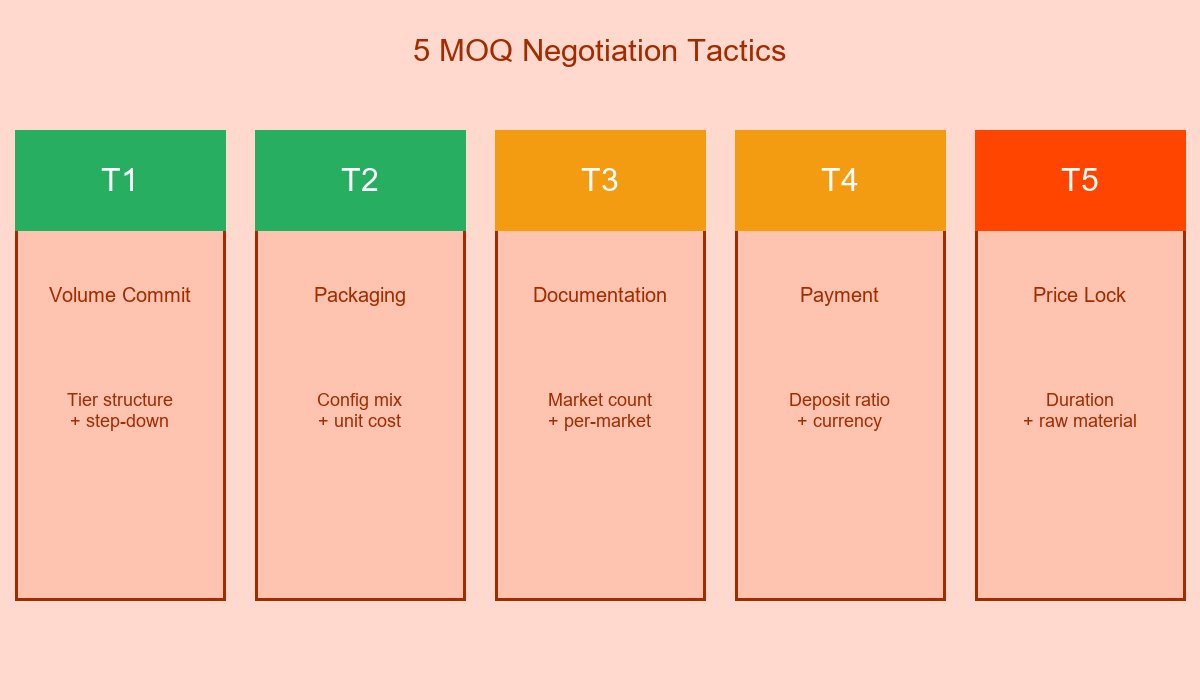
The tactic moves the step-down threshold, the tier documentation scope, and the production slot reservation. KONGDY's tiered pricing supports 50,000-piece, 100,000-piece, 200,000-piece, and 500,000-piece step-downs with the price lock documented in the supply agreement.
2.2 Step-Down Threshold Negotiation (KONGDY)
The step-down threshold negotiation commits the volume in tiers rather than in one block, so the buyer reaches the higher threshold with a documented schedule instead of a single large commitment. KONGDY's commercial team structures the commitment schedule per buyer.
2.3 What the Buyer Should Document (KONGDY)
The buyer should document the committed volume per tier, the step-down schedule, the price lock, and the production slot reservation. KONGDY's quotation includes each item.
3. Tactic 2: Negotiate the Packaging Configuration
The second tactic is to negotiate the packaging configuration. The packaging configuration drives a large share of the unit cost and a large share of the retail price point, and it is the lever that separates a commodity order from a branded program.
3.1 What the Tactic Moves (KONGDY)
The tactic moves the sachet count, the secondary packaging material, the premium format, and the multi-count set. KONGDY's packaging cost table documents the unit cost increment per configuration and supplies the configurations on the same converting line.
3.2 Configuration Mix Negotiation (KONGDY)
The configuration mix negotiation balances the standard configuration against the premium format against the multi-count set. KONGDY's commercial team returns the packaging cost table with the mixed-configuration quotation.
3.3 What the Buyer Should Document (KONGDY)
The buyer should document the configuration mix, the per-configuration unit cost, the retail price point, and the artwork scope per configuration. KONGDY's packaging cost table includes each item.
4. Tactic 3: Negotiate the Documentation Scope
The third tactic is to negotiate the documentation scope. The documentation scope is a real cost line that a buyer can either absorb silently or negotiate explicitly, and negotiating it opens the multi-market rollout without a separate price increase.
4.1 What the Tactic Moves (KONGDY)
The tactic moves the destination market count, the per-market dossier scope, the stability data roll-forward, and the post-market surveillance scope. KONGDY's documentation deliverable list is documented per destination market.
4.2 Multi-Market Scope Negotiation (KONGDY)
The multi-market scope negotiation trades the market count against the per-market documentation cost. KONGDY's commercial team returns the per-market documentation cost so the buyer can see which market carries the cost.
4.3 What the Buyer Should Document (KONGDY)
The buyer should document the destination market count, the per-market deliverable list, the stability roll-forward scope, and the surveillance scope. KONGDY's documentation deliverable list includes each item.
5. Tactic 4: Negotiate the Payment Terms and Currency
The fourth tactic is to negotiate the payment terms and the currency. The payment structure decides the buyer's working capital cost during the production lead time, and the currency decides whether the buyer carries the exchange rate risk across the reorder cycle.
5.1 What the Tactic Moves (KONGDY)
The tactic moves the deposit ratio, the balance timing, the payment structure, and the currency. KONGDY supports T/T and L/C structures with USD, EUR, GBP, and CNY pricing per tier.
5.2 Deposit Ratio Negotiation (KONGDY)
The deposit ratio negotiation trades a lower deposit ratio against a shorter quotation validity. KONGDY's commercial team documents the quotation validity window alongside the payment structure.
5.3 Currency Hedging Negotiation (KONGDY)
The currency hedging negotiation applies to the multi-year program where the exchange rate moves materially across the term. KONGDY offers a hedging option for multi-year programs.
5.4 What the Buyer Should Document (KONGDY)
The buyer should document the deposit ratio, the balance timing, the payment structure, the currency, and the hedging clause. KONGDY's supply agreement includes each item.
6. Tactic 5: Negotiate the Price Lock Duration
The fifth tactic is to negotiate the price lock duration. The price lock decides whether the buyer carries the raw material movement between the quotation date and the production run, and across a multi-year program the duration decides how much of that risk the supplier absorbs.
6.1 What the Tactic Moves (KONGDY)
The tactic moves the quotation validity window, the program-term price lock, and the raw material adjustment clause. KONGDY's commercial team documents the validity window and the price lock in the supply agreement.
6.2 Price Lock Duration Negotiation (KONGDY)
The price lock duration negotiation trades the lock duration against the volume commitment scope. KONGDY's multi-year supply agreement structure lets the buyer extend the lock against a documented commitment.
6.3 Raw Material Clause Review (KONGDY)
The raw material clause review documents the trigger, the adjustment mechanism, and the notification window. KONGDY's price lock includes the documented raw material clause with a customer notification window.
6.4 What the Buyer Should Document (KONGDY)
The buyer should document the price lock duration, the raw material clause, the notification window, and the commitment scope. KONGDY's supply agreement includes each item.
7. Sequencing the Five Tactics in the Negotiation
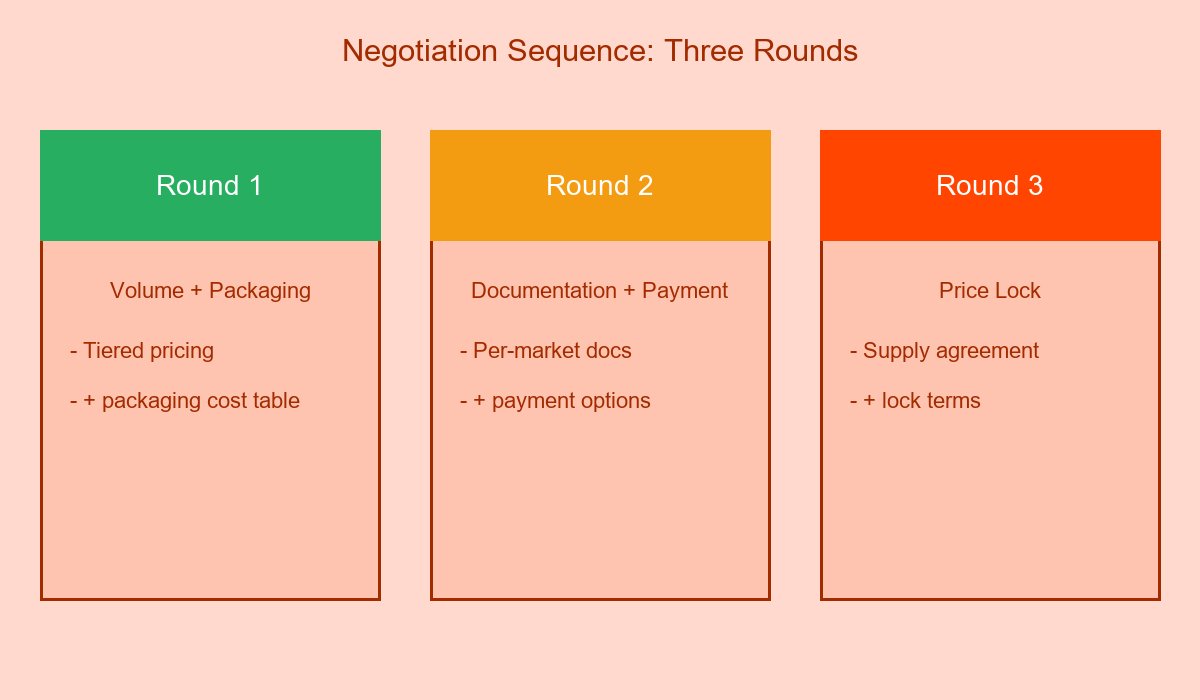
The five tactics work better in a sequence than in parallel. The volume commitment structure comes first because it defines the tier. The packaging configuration comes second because it defines the unit cost. The documentation scope comes third because it defines the market count. The payment terms come fourth because they depend on the commitment structure. The price lock comes last because it depends on everything else.
7.1 Round One: Volume and Packaging (KONGDY)
Round one settles the volume commitment structure and the packaging configuration. KONGDY's commercial team returns the tiered pricing and the packaging cost table in the first quotation.
7.2 Round Two: Documentation and Payment (KONGDY)
Round two settles the documentation scope and the payment terms. KONGDY's commercial team returns the per-market documentation deliverable list and the payment structure options.
7.3 Round Three: Price Lock (KONGDY)
Round three settles the price lock duration and the raw material clause. KONGDY's commercial team returns the supply agreement draft with the price lock terms.
7.4 Why the Sequence Matters (KONGDY)
The sequence matters because each round's outcome becomes the next round's constraint. KONGDY's quotation rounds follow this sequence so the buyer sees the full landed economics before the final commercial terms.
8. Common Negotiation Mistakes and How to Avoid Them
Most negotiation failures trace back to four predictable mistakes. The list below covers the most common ones and how KONGDY supports the buyer in avoiding them.
8.1 Negotiating Unit Price Only (KONGDY)
A buyer who negotiates the unit price only ends up with a lower headline number and the same working capital, documentation scope, and lead time. KONGDY's commercial team returns the full cost structure so the negotiation covers the real levers.
8.2 Committing the Full Volume in Round One (KONGDY)
A buyer who commits the full volume in the first round loses the ability to negotiate the documentation scope and the payment terms against a defined commitment. KONGDY's tiered commitment schedule keeps the commitment flexible through the first two rounds.
8.3 Ignoring the Packaging Configuration (KONGDY)
A buyer who ignores the packaging configuration discovers the margin gap at the container stage. KONGDY's packaging cost table documents the unit cost increment per configuration.
8.4 No Price Lock Duration (KONGDY)
A buyer without a price lock duration absorbs the raw material movement between quotation and production. KONGDY's supply agreement documents the validity window and the price lock.
9. Landed Economics: What the Negotiation Actually Decides
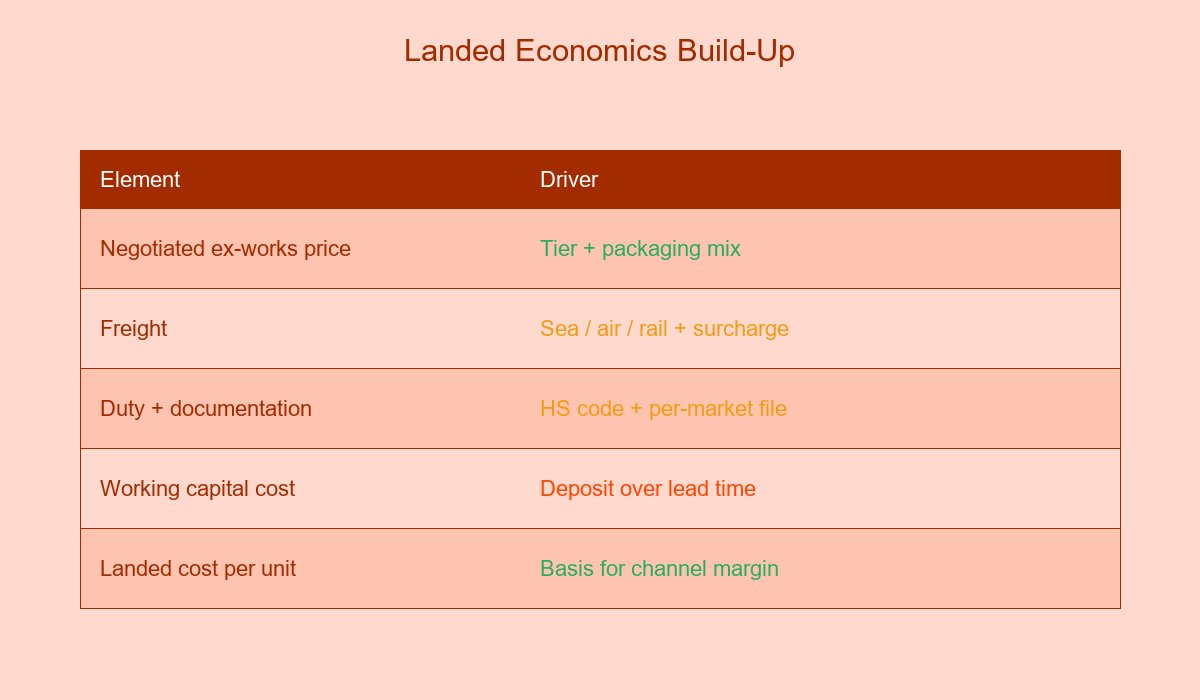
The negotiation decides the landed economics, not the unit price. The landed economics combines the negotiated unit price, the packaging increment, the freight, the duty, the documentation cost, and the working capital cost of the payment structure.
9.1 Landed Cost Build-Up (KONGDY)
The landed cost build-up combines the ex-works price, the freight per mode, the duty and tariff, the brokerage, and the documentation cost. KONGDY's commercial team returns the landed cost per Incoterm.
9.2 Working Capital Cost of the Payment Structure (KONGDY)
The working capital cost of the payment structure measures the deposit amount held over the production lead time. KONGDY's commercial team supports the calculation with the lead time and the deposit ratio.
9.3 Margin Effect per Channel (KONGDY)
The margin effect per channel applies the landed cost against the retail price point in each channel. KONGDY's commercial team returns the channel margin projection with the final quotation.
10. Conclusion: MOQ Negotiation as a Landed Economics Exercise
Knee pain patch MOQ negotiation is a landed economics exercise, not a discount negotiation. The buyer who negotiates the five levers captures the volume step-down, the packaging efficiency, the multi-market scope, the working capital cost, and the price protection that the tactical framework delivers.
KONGDY runs knee pain patch OEM programs under ISO 22716 GMP certification with FDA registration, EU CPSR preparation, in-house analytical, microbiological, and stability laboratories, knee pain patch-specific large body-area adhesion testing rigs, and documented change control. The negotiation program supports the buyer with the tiered volume structure, the packaging cost table, the per-market documentation cost, the payment structure options, and the supply agreement draft with the price lock.
Request KONGDY's knee pain patch MOQ negotiation quotation within 48 hours — share your target market, committed volume profile, packaging direction, and payment preference, and the commercial team will return the tiered pricing, the packaging cost table, the per-market documentation cost, the payment structure options, and the landed cost per Incoterm for your first negotiation round.
Book a factory audit or live video tour at KONGDY's ISO 22716 facility to review the converting line, the large patch adhesion testing rigs, the analytical laboratory, and the stability chamber room, and request a free sample to validate adhesion duration, skin-contact comfort, and first-impression in your channel. Bulk buyers planning a first container within one quarter can reserve a production slot while the negotiation rounds and artwork work run in parallel.

