Heat patch supplier audit: 80+ checklist items across 10 categories for B2B buyers. 4 audit methodologies, 5 timing options, 6 red flags. KONGDY 36 years.
1. Why Supplier Audit Matters for B2B Heat Patch Procurement
Heat patch supplier audit determines 30-50% of long-term procurement success by verifying manufacturer capabilities before commitment. According to KONGDY's audit data across 800+ B2B partner brands, brands that conduct systematic supplier audits achieve 40-60% better supplier reliability, 25-35% lower quality issue rates, and 3-5 year longer successful partnerships than brands that skip formal audits.
Supplier audit is uniquely critical in heat patch procurement because: (1) heat patch manufacturing spans diverse capability dimensions (production, QC, compliance, R&D) that brochures cannot fully verify, (2) audit discovers hidden issues before they become procurement problems, (3) audit establishes baseline capabilities for ongoing monitoring, and (4) audit creates mutual accountability framework for partnership. Brands that skip audits typically discover manufacturer weaknesses 6-18 months into partnership, when switching costs are 5-10x higher.
This article provides the complete supplier audit framework for B2B heat patch procurement: 10 audit categories, 80+ audit checklist items, 4 audit methodologies, 5 audit timing options, 6 audit red flags, and 4 audit mistake patterns. Whether you are auditing your first supplier or re-auditing an existing partner, this guide provides systematic framework for evaluation. KONGDY's heat patch manufacturer facility welcomes audits and provides full transparency on all 10 audit categories for qualified B2B buyers.
2. 10 Audit Categories for Heat Patch Manufacturers
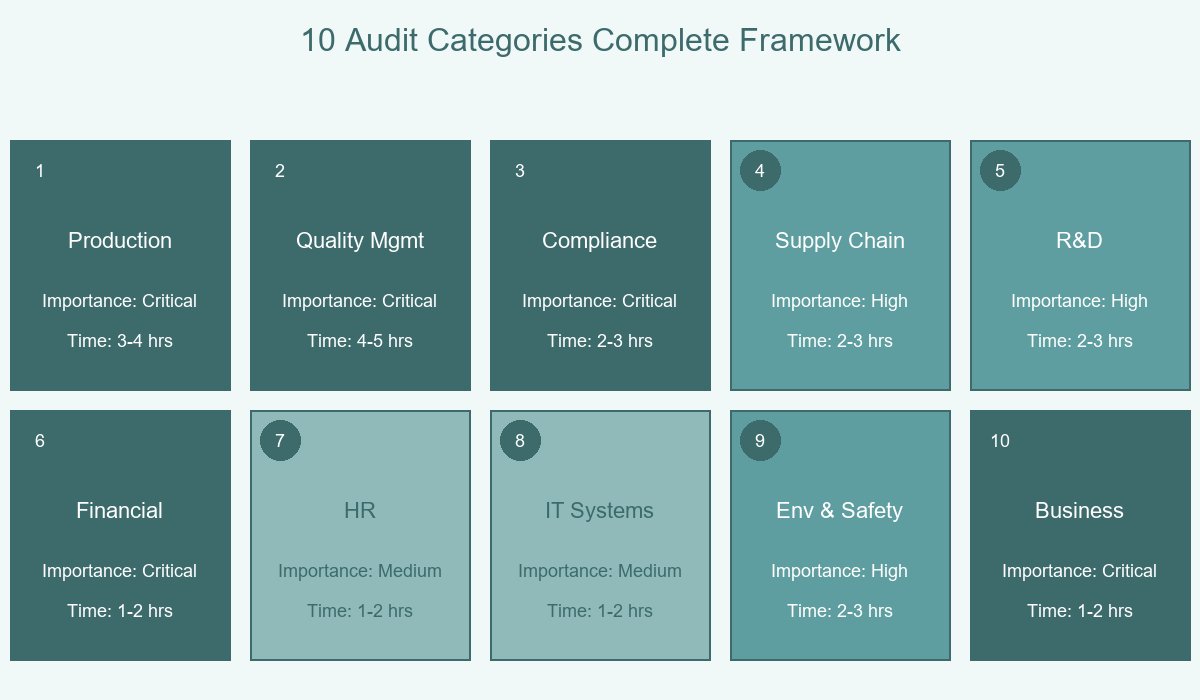
Ten audit categories must be evaluated for comprehensive heat patch supplier assessment. Skipping categories creates blind spots that lead to premature partnership issues.
Table 1: 10 Heat Patch Supplier Audit Categories
| Category |
Audit Focus |
Importance |
Audit Time |
| 1. Production Capability |
Capacity, equipment, scalability |
Critical |
3-4 hours |
| 2. Quality Management |
QC systems, defect tracking, testing |
Critical |
4-5 hours |
| 3. Regulatory Compliance |
Certifications, documentation, audits |
Critical |
2-3 hours |
| 4. Supply Chain |
Raw material sourcing, backup suppliers |
High |
2-3 hours |
| 5. R&D and Innovation |
Formulation capability, innovation pipeline |
High |
2-3 hours |
| 6. Financial Stability |
Revenue, profitability, growth |
Critical |
1-2 hours |
| 7. Human Resources |
Staff capability, training, retention |
Medium |
1-2 hours |
| 8. Information Systems |
ERP, MES, data security |
Medium |
1-2 hours |
| 9. Environmental & Safety |
Environmental compliance, safety practices |
High |
2-3 hours |
| 10. Business Practices |
Ethics, contracts, dispute resolution |
Critical |
1-2 hours |
Category 1: Production Capability
Production capability audit verifies: facility size and condition, production line count and capacity, equipment age and maintenance, production planning systems, capacity utilization, scalability options, peak season handling, and subcontracting practices. Key questions: monthly production capacity, number of production lines, equipment list and age, production scheduling system, capacity utilization rate, maximum peak capacity, and backup production options.
Category 2: Quality Management
Quality management audit evaluates: QC organizational structure, quality system documentation (quality manual, procedures, work instructions), incoming material inspection, in-process QC checkpoints, finished product testing, defect tracking and analysis, customer complaint handling, corrective action processes, and continuous improvement programs. Key metrics: defect rate by month, QC inspector count, testing equipment list, calibration records, and customer complaint resolution time.
Category 3: Regulatory Compliance
Regulatory compliance audit verifies: current certifications (ISO 13485, FDA, CE, REACH, MHRA, TGA), certificate validity periods, certificate scope, regulatory submission history, audit history, non-conformance records, and corrective action on findings. Key documents: ISO 13485 certificate, FDA registration, Drug Master File, CE technical file, REACH compliance documentation, and country-specific registrations.
Category 4: Supply Chain
Supply chain audit evaluates: key raw material suppliers, supplier qualification process, material specifications, incoming material testing, backup supplier arrangements, inventory management, logistics and shipping, and supply chain transparency. Key questions: who supplies iron powder, who supplies adhesive, who supplies backing material, supplier audit frequency, backup supplier existence, and inventory turnover rate.
Category 5: R&D and Innovation
R&D capability audit assesses: R&D team size and qualifications, formulation development capability, innovation pipeline, patent portfolio, industry trend awareness, customer collaboration on new products, and test equipment for R&D. Key metrics: number of R&D specialists, new product launches per year, patents filed, R&D investment ratio, and customer collaboration projects.
Category 6: Financial Stability
Financial stability audit reviews: company revenue, profitability trends, growth trajectory, cash flow position, debt levels, customer concentration, and key financial ratios. Key documents: 3-year financial statements, tax filings, audited annual reports, and credit reports from agencies (D&B, CreditSafe). Public companies: SEC filings. Private companies: management representations and bank references.
Category 7: Human Resources
HR audit evaluates: total employee count, organizational structure, key personnel qualifications, training programs, employee turnover rate, labor practice compliance, and key person dependencies. Key questions: who is the key account manager, what is the production manager's background, what is the QC manager's experience, employee turnover rate, and training program details.
Category 8: Information Systems
Information systems audit verifies: ERP system implementation, Manufacturing Execution System (MES), batch tracking system, document management, data security practices, backup procedures, and IT infrastructure. Key questions: what ERP system is used, how is batch traceability maintained, what is data backup frequency, and what is cybersecurity posture.
Category 9: Environmental & Safety
Environmental and safety audit reviews: environmental management system (ISO 14001), waste management, emissions control, chemical handling, workplace safety, fire safety, emergency procedures, and labor safety compliance. Key documents: ISO 14001 certificate, environmental permits, safety audit reports, and incident records.
Category 10: Business Practices
Business practices audit evaluates: ethical business standards, contract practices, payment terms policies, dispute resolution mechanisms, customer references, intellectual property practices, and confidentiality procedures. Key questions: standard contract terms, payment policies, dispute resolution process, references from 3+ customers, and IP protection practices.
3. 80+ Audit Checklist Items
Over 80 checklist items across 10 categories provide comprehensive audit coverage. Each item is verifiable through document review, observation, or interview.
Production Capability Checklist (10 items)
- Total facility area (m²) and owned vs leased
- Number of production lines and capacity per line
- Equipment list with age and maintenance records
- Maximum monthly production capacity (units)
- Current capacity utilization rate
- Peak season capacity increase capability
- Subcontracting usage and backup facilities
- Production planning and scheduling system
- Lead time for 50K unit order
- Capacity expansion plan for next 2 years
Quality Management Checklist (10 items)
- Quality manual current and comprehensive
- QC organization chart with defined responsibilities
- Number of QC inspectors and qualifications
- Incoming material inspection procedures
- In-process QC checkpoints and frequency
- Finished product testing scope and methods
- Defect tracking system and monthly metrics
- Customer complaint handling procedure
- Corrective and preventive action (CAPA) process
- Continuous improvement program evidence
Regulatory Compliance Checklist (8 items)
- ISO 13485 certificate current (within 3 years)
- FDA registration and Drug Master File reference
- CE marking technical file complete and current
- REACH compliance documentation
- Country-specific registrations for target markets
- External audit history and findings
- Internal audit program and results
- Regulatory update monitoring process
Supply Chain Checklist (8 items)
- Key raw material supplier list and qualification
- Material specification documents complete
- Incoming material testing protocols
- Backup supplier arrangements for critical materials
- Inventory management system and turnover metrics
- Supplier audit frequency and results
- Supply chain risk assessment completed
- Logistics and shipping arrangements
R&D and Innovation Checklist (7 items)
- R&D team size and qualifications
- Formulation development capability evidence
- New product launches per year (last 3 years)
- Patent portfolio and IP filings
- Industry trend awareness and market intelligence
- Customer collaboration process for new products
- R&D investment as % of revenue
Financial Stability Checklist (8 items)
- 3-year revenue trend and growth rate
- Profitability margins (gross, operating, net)
- Cash flow position and working capital
- Debt levels and debt-to-equity ratio
- Customer concentration (top 5 customers %)
- Audited financial statements availability
- Credit report (D&B, CreditSafe) rating
- Bank references and credit lines
Human Resources Checklist (7 items)
- Total employee count and growth trend
- Key personnel qualifications and experience
- Employee turnover rate (annualized)
- Training program documentation
- Labor practice compliance (no child labor, etc.)
- Key person dependencies and succession plans
- Employee satisfaction indicators
Information Systems Checklist (6 items)
- ERP system implementation and usage
- Manufacturing Execution System (MES) for batch tracking
- Document management system
- Data backup procedures and frequency
- Cybersecurity measures and incident history
- IT infrastructure and disaster recovery
Environmental & Safety Checklist (8 items)
- Environmental management system (ISO 14001)
- Waste management procedures and compliance
- Emissions control and air quality permits
- Chemical handling and storage safety
- Workplace safety program and incident records
- Fire safety equipment and evacuation procedures
- Personal protective equipment (PPE) usage
- Worker health and safety training
Business Practices Checklist (8 items)
- Ethical business standards and code of conduct
- Standard contract terms and policies
- Payment terms policies and exceptions
- Dispute resolution mechanism
- Customer references (3+ B2B contacts)
- Intellectual property protection practices
- Confidentiality and NDA procedures
- Subcontracting and supplier management policies
4. 4 Audit Methodologies
Four audit methodologies can be used individually or in combination. Each has different depth, cost, and applicability.
Table 2: 4 Heat Patch Audit Methodologies
| Methodology |
Approach |
Cost |
Depth |
When to Use |
| 1. On-Site Audit |
Buyer visits factory for 1-3 days |
$2,000-5,000 |
95%+ |
First orders, large orders |
| 2. Third-Party Audit |
Independent auditor visits factory |
$1,000-3,000 |
85-90% |
Regular audits, remote buyers |
| 3. Document Audit |
Review submitted documents remotely |
$300-800 |
60-75% |
Initial screening, simple verification |
| 4. Hybrid Audit |
Document audit + on-site verification |
$1,500-4,000 |
90-95% |
Established brands, ongoing monitoring |
Methodology 1: On-Site Audit
On-site audit involves buyer representatives visiting factory for 1-3 days. Activities: facility tour, production line observation, QC system review, document inspection, personnel interviews, sample testing. Most thorough methodology. Cost includes travel, time, and evaluator fees. Best for first orders, large orders ($50K+), and brand-critical products.
Methodology 2: Third-Party Audit
Third-party audit engages independent auditor (SGS, Bureau Veritas, or quality specialist) to visit factory on buyer's behalf. Auditor follows buyer's audit checklist, produces independent report. Cost-effective for buyers without audit expertise or travel budget. Best for regular audits, remote buyers, and ongoing supplier monitoring.
Methodology 3: Document Audit
Document audit reviews submitted documents (certificates, QC reports, financial statements) without site visit. Limited depth but useful for initial screening and verification. Best for: initial supplier qualification, simple verification, cost-conscious buyers. Combine with site visit for critical decisions.
Methodology 4: Hybrid Audit
Hybrid audit combines document audit with on-site verification. Documents reviewed remotely first, then targeted site visit focuses on areas of concern. Balance of depth and cost. Best for established brands with audit experience, ongoing supplier monitoring, and re-audits.
5. 5 Audit Timing Options
Five audit timing options cover different stages of supplier relationship. Each timing catches different issues.
Table 3: 5 Heat Patch Audit Timing Options
| Timing |
When |
Focus |
Frequency |
| 1. Pre-Selection Audit |
Before first order |
Capability, risk, fit |
Once per supplier |
| 2. Pre-Production Audit |
Before first batch production |
Setup, materials, training |
Once per buyer |
| 3. Ongoing Audit |
During relationship |
Sustained performance |
Annual or biannual |
| 4. Issue Audit |
After quality or service issue |
Root cause analysis |
As needed |
| 5. Renewal Audit |
Before contract renewal |
Continued capability |
Before renewal |
Timing 1: Pre-Selection Audit
Pre-selection audit occurs before committing to supplier. Most comprehensive audit, covering all 10 categories. Identifies major red flags before partnership. Investment: $2,000-5,000. Recommended for all first-time suppliers. Results inform supplier selection decision.
Timing 2: Pre-Production Audit
Pre-production audit occurs after supplier selection but before first production. Verifies production setup, material sourcing, training, and pilot batch quality. Investment: $1,000-3,000. Recommended for first orders and new product launches. Catches setup issues before expensive production.
Timing 3: Ongoing Audit
Ongoing audit conducted annually or biannually during active relationship. Verifies sustained performance, identifies deterioration, validates continued partnership. Investment: $1,000-3,000 per audit. Recommended for active suppliers. Frequency depends on order volume and risk level.
Timing 4: Issue Audit
Issue audit triggered by quality problems, delivery issues, or other concerns. Focuses on root cause analysis and corrective action verification. Investment: $1,500-4,000. Recommended when issues indicate systemic problems. Discover root cause vs symptom fixes.
Timing 5: Renewal Audit
Renewal audit before contract renewal or partnership extension. Comprehensive review of past performance, current capabilities, future alignment. Investment: $1,500-4,000. Recommended before any major commitment renewal. Informs renewal vs alternative decision.
6. 6 Audit Red Flags
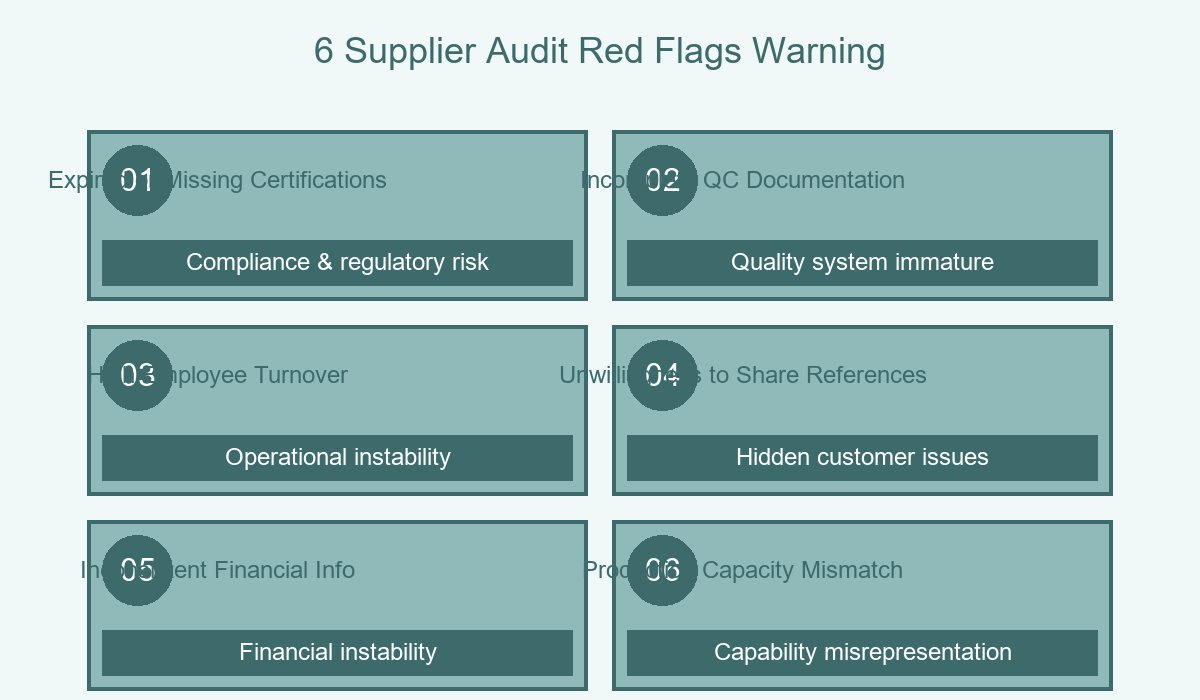
Six audit red flags indicate significant supplier risk. Manufacturers exhibiting 2+ red flags should be eliminated or escalated to detailed review.
Table 4: 6 Heat Patch Supplier Audit Red Flags
| Red Flag |
Risk Created |
Detection Method |
| 1. Expired or missing certifications |
Compliance and regulatory risk |
Verify certificate dates |
| 2. Incomplete QC documentation |
Quality system not mature |
Review QC records |
| 3. High employee turnover visibility |
Operational instability |
Observe staff, interview |
| 4. Unwillingness to share references |
Hidden customer issues |
Request 3+ references |
| 5. Inconsistent financial information |
Financial instability |
Cross-check financials |
| 6. Production capacity mismatch |
Capability misrepresentation |
Verify equipment list |
Red Flag 1: Expired or Missing Certifications
Expired ISO 13485, FDA registration, or CE marking indicate operational risk. Expired certificates typically reflect either failure to maintain standards or financial/resource constraints. Request current certificates with verification through issuing bodies. Manufacturers with expired certificates should be eliminated unless re-certification is in progress.
Red Flag 2: Incomplete QC Documentation
Incomplete QC records (missing batch records, incomplete inspection reports, no calibration records) indicate quality system immaturity. Thorough manufacturers maintain detailed documentation for every batch. Incomplete documentation typically correlates with quality issues downstream. Request sample batch records and inspection reports to verify.
Red Flag 3: High Employee Turnover Visibility
Visible high turnover (many new employees, vacant key positions, long-tenured QC manager leaving) indicates operational instability. Production quality depends on experienced staff. High turnover disrupts quality consistency. Interview key personnel for tenure and observe staff during facility tour.
Red Flag 4: Unwillingness to Share References
Reluctance to provide customer references indicates hidden issues. Strong manufacturers willingly provide 3+ references. Refusal suggests either customer complaints or non-disclosure issues. Always request references and verify through independent contact (not provided emails).
Red Flag 5: Inconsistent Financial Information
Inconsistent financials (revenue mismatch between statements and business registration, declining revenue trends, high customer concentration) indicate financial instability. Financially unstable suppliers may compromise quality, reduce capacity, or exit business. Verify financials through multiple sources and consider credit report.
Red Flag 6: Production Capacity Mismatch
Claimed capacity far exceeds visible equipment (e.g., claims 5M units/month but equipment suggests 1M) indicates misrepresentation. Verify equipment list against claimed capacity. Subcontracting should be transparent; undisclosed subcontracting is major risk. Audit production during peak operation if possible.
7. KONGDY's Supplier Audit-Friendly Practices
KONGDY welcomes buyer audits and provides full transparency across all 10 audit categories. Our audit-ready practices reflect 36 years of partnership experience.
KONGDY's Audit Documentation Package
KONGDY provides comprehensive audit documentation package including: company registration, ISO 13485 certificate (current), FDA registration, CE technical file, REACH compliance, quality manual, sample batch records, sample QC reports, customer references (10+), financial statements (3 years), and facility tour. Documentation available in digital format for buyer audit teams.
KONGDY's Audit-Friendly Facility
KONGDY's facility is designed for buyer audits: dedicated audit room for document review, comprehensive facility tour route, accessible management team, transparent production observation, and sample testing capability. Most buyer audits complete in 1-2 days. KONGDY assigns dedicated audit coordinator to support comprehensive review.
KONGDY's Audit Cost Coverage
For qualified B2B buyers, KONGDY covers: facility tour (free), documentation review (free), sample testing (free up to 10 samples), and lunch during audit day. Buyer covers: travel, accommodation, and third-party auditor fees. This cost-sharing reflects KONGDY's commitment to transparent partnership.
8. 4 Audit Mistakes to Avoid
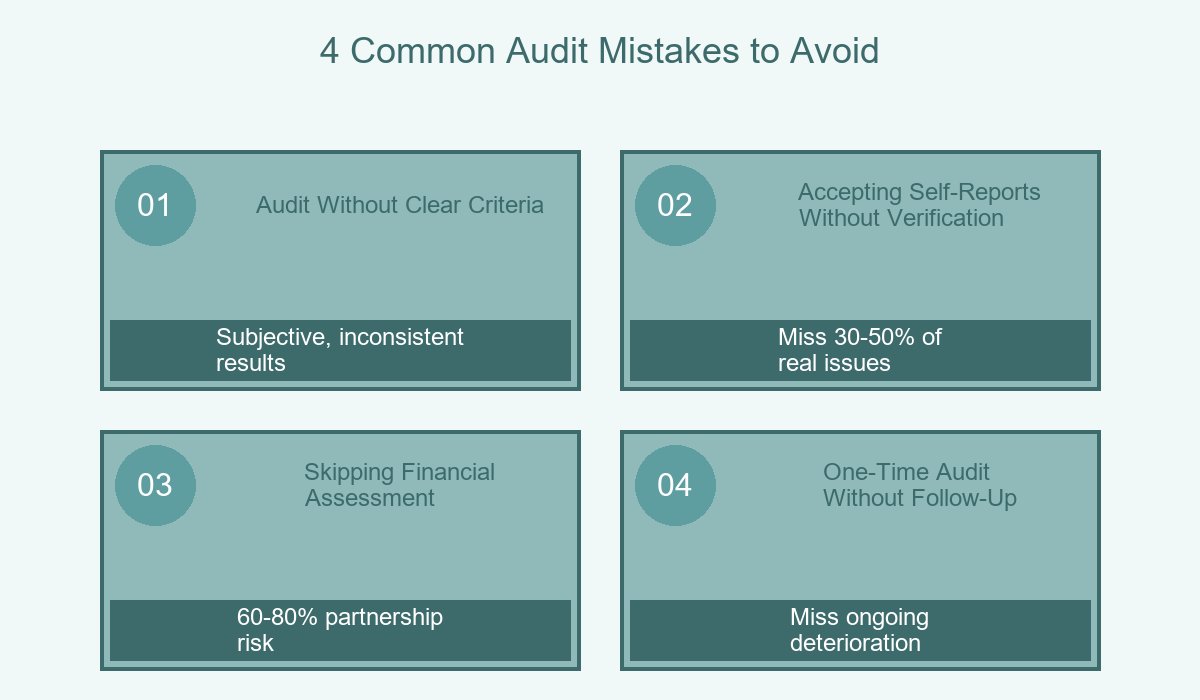
Four common audit mistakes reduce audit effectiveness and lead to poor supplier selection. Avoid these patterns.
Mistake 1: Conducting Audit Without Clear Criteria
Audit without defined qualification criteria becomes subjective evaluation. Establish clear pass/fail criteria before audit based on: minimum capacity, required certifications, acceptable defect rate, financial thresholds, and compliance requirements. Audit results evaluated against criteria for objective decision.
Fix: Define qualification criteria before audit. Use 80+ checklist items with scoring system (0-3 per item, minimum 80% pass rate for qualification). Document criteria in audit scope document.
Mistake 2: Accepting Manufacturer Self-Reports Without Verification
Manufacturer self-reports (claimed capacity, claimed defect rate, claimed certifications) are useful but need verification. Cross-check through observation, document review, third-party audits, and reference contacts. Self-report-only audit misses 30-50% of issues.
Fix: Always verify self-reports through independent means: facility tour for capacity, certificate verification for compliance, reference contacts for quality, document inspection for QC records. Combine self-report with verification for comprehensive audit.
Mistake 3: Skipping Financial Stability Assessment
Many buyers skip financial assessment, focusing only on capability and quality. Financially unstable suppliers create 60-80% partnership risk: quality compromise, capacity reduction, business closure. Financial assessment is critical for multi-year partnerships.
Fix: Always review 3-year financial statements, verify credit report, check payment history with suppliers. Request audited statements for orders above $50K. Financial assessment takes 1-2 hours but prevents major partnership risks.
Mistake 4: One-Time Audit Without Follow-Up
One-time audit before partnership is necessary but insufficient. Supplier capabilities change over time: staff turnover, equipment aging, ownership changes, financial shifts. Ongoing audit (annual or biannual) detects deterioration and enables intervention.
Fix: Establish ongoing audit schedule for active suppliers: annual comprehensive audit, quarterly mini-audit on critical issues. Update audit findings over time and address trends. Treat audit as ongoing relationship management, not one-time event.
9. Frequently Asked Questions About Heat Patch Supplier Audit
Q1: How long does a heat patch supplier audit take?
Comprehensive on-site audit takes 1-3 days depending on facility size and audit scope. Single-day audit suitable for screening qualified candidates. Two-day audit for detailed evaluation with production observation. Three-day audit for comprehensive review including all 10 categories. Document audit takes 4-8 hours of remote review.
Q2: What's the cost of supplier audit?
Audit cost varies by methodology: on-site audit $2,000-5,000 (includes travel, time, evaluator fees), third-party audit $1,000-3,000, document audit $300-800, hybrid audit $1,500-4,000. Cost is negligible compared to cost of selecting wrong supplier (typically $50,000-500,000 in lost orders, quality issues, and partnership costs).
Q3: Can I audit remotely without visiting factory?
Document audit can be done remotely (reviewing certificates, financial statements, sample QC reports). However, comprehensive audit requires site visit to verify production capability, observe QC process, and interview key personnel. Remote audit catches 60-75% of issues vs 95%+ for site audit. Use document audit for screening, site visit for final decision.
Q4: How do I find qualified third-party auditor?
Choose auditor based on: (1) audit experience in pharmaceutical/medical device/cosmetics industry, (2) China presence for factory visits, (3) audit framework (ISO 9001, ISO 13485, custom), (4) reporting quality, (5) cost. Top firms: SGS, Bureau Veritas, TÜV, AsiaInspection, V-Trust. Request sample audit reports before engagement.
Q3: Should I audit before every order?
No for established relationships. Recommended audit frequency: pre-selection audit (once), pre-production audit (once per buyer-supplier pair), ongoing audit (annual for active suppliers), issue audit (as needed), renewal audit (before contract renewal). Cost-benefit favors annual audit for relationships above $50K annual value.
Q6: What if supplier refuses audit?
Supplier audit refusal is major red flag indicating potential issues. Reputable manufacturers welcome audits as verification of their capabilities. Refusal suggests hidden problems: quality issues, capability exaggeration, regulatory non-compliance, or financial instability. Eliminate or escalate to detailed review with strong cautions.
Q7: Can small manufacturers pass comprehensive audit?
Yes if they meet qualification criteria. Small manufacturers can achieve quality, compliance, and capability requirements without large scale. KONGDY's audit framework evaluates 80+ items across 10 categories, applicable to manufacturers of any size. Small manufacturers may have lower capacity but can still achieve high quality and compliance standards.
Q8: How do I verify audit findings independently?
Verify findings through: (1) document inspection (verify certificates directly with issuing bodies), (2) reference contacts (call 3+ customer references independently), (3) sample testing (send samples to independent lab), (4) financial verification (request credit report from D&B or CreditSafe), (5) regulatory verification (check FDA registration database, ISO registrar database). Independent verification prevents audit result misrepresentation.
About KONGDY
KONGDY is a leading heat patch manufacturer based in Henan, China, with 36 years of transdermal patch manufacturing experience and audit-friendly practices supporting 800+ B2B partner brands. Our 36,000 m² facility meets all 10 audit categories with comprehensive documentation and transparent operations.
KONGDY's audit advantages include: full audit documentation package (certificates, reports, references), audit-friendly facility (dedicated audit room, comprehensive tour route), transparent operations (production observation, QC review), current certifications (ISO 13485, FDA, CE, REACH, MHRA, TGA), strong financial stability (36 years consistent operation), and dedicated audit coordinator. Our 12 account managers across 5 languages support audit scheduling and result review.
Beyond heat patches, KONGDY also provides audit-ready quality for pain patch manufacturer and capsicum plaster manufacturer products, allowing B2B brands to consolidate procurement with audit-ready standards across categories. Contact us at KONGDY Heat Patch Collection to schedule supplier audit, request audit documentation package, or arrange facility tour.
Final Thoughts: Supplier Audit as Procurement Foundation
Heat patch supplier audit is the foundation of B2B procurement success. The 10 audit categories, 80+ checklist items, 4 audit methodologies, 5 timing options, 6 red flags, and 4 mistakes in this article provide comprehensive framework for systematic supplier evaluation.
The single most important insight is that audit is about risk identification and capability verification, not paper exercise. Brands that conduct thorough audits achieve 40-60% better supplier reliability and 3-5 year longer partnerships. KONGDY exemplifies the audit-friendly approach, combining comprehensive documentation with transparent operations and partnership-focused audit support.
If you are planning to audit KONGDY for heat patch manufacturer qualification, request our audit documentation package, schedule a 2-day facility audit, and prepare your 80+ checklist items. KONGDY responds to all audit requests within 24 hours and provides comprehensive audit support within 5-7 business days at our heat patch collection page.

