For wellness brands expanding beyond standard private label solutions, customization offers stronger differentiation and premium positioning. But an important question arises:
Do Custom lavender detox foot pads require more testing compared to Private Label options?
The short answer is yes—often they do, depending on the scope of modification.
When working with a professional lavender detox foot pads Manufacturer, understanding how customization impacts regulatory and safety testing is essential. Brands investing in lavender detox foot pads OEM projects must evaluate testing requirements early to avoid delays, compliance risks, and unexpected costs.
This guide explains when additional testing is required and how to plan accordingly.
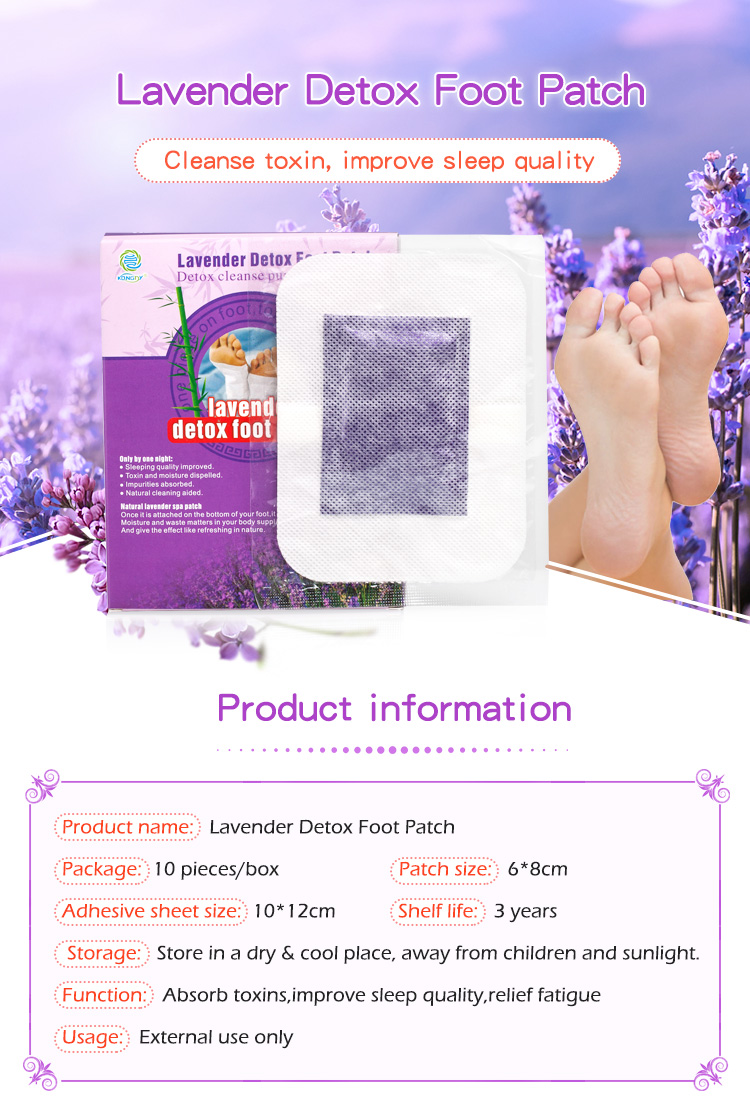
Unlike Private Label lavender detox foot pads, which use pre-tested standard formulas, Custom lavender detox foot pads may involve:
New ingredient additions
Adjusted ingredient ratios
Different essential oil concentrations
Modified adhesive systems
New packaging materials
Market-specific claim positioning
Each modification can influence product safety, stability, and regulatory classification.
Testing ensures that the updated formulation remains safe, compliant, and consistent.
If you adjust:
Lavender oil concentration
Add herbal extracts (ginger, mint, etc.)
Modify bamboo vinegar percentage
Introduce new functional powders
Then additional testing is typically required, including:
Microbial re-testing
Heavy metal analysis
Stability testing
Safety reassessment
A responsible lavender detox foot pads Supplier will not rely on old reports if the formula changes.
If your Custom lavender detox foot pads include new botanicals or essential oils, regulatory requirements may demand:
Toxicological review
Allergen analysis
Updated CPSR (for EU markets)
Additional documentation for FDA compliance
Ingredient changes can also affect fragrance allergen declarations in the EU.
Changing:
Adhesive type
Non-woven fabric material
Inner pouch film
Outer packaging structure
May require:
Stability re-evaluation
Adhesion performance testing
Compatibility testing
Shelf-life reassessment
Even without formula changes, material modifications can impact product integrity.
If you expand into:
The United States
The European Union
Middle Eastern markets
Your lavender detox foot pads OEM partner may need to support:
CPSR documentation (EU)
CPNP notification
MoCRA compliance (US)
Updated heavy metal thresholds
Testing previously completed for one market may not satisfy another.
Generally include:
Existing microbial testing
Heavy metal reports
Stability data
Basic safety documentation
Testing costs are usually lower because data already exists.
However, brands must still verify report validity and regional compliance.
May require:
Formula-specific stability testing
Additional safety evaluation
Updated allergen analysis
Fresh regulatory documentation
While this increases upfront investment, it also enhances brand exclusivity and long-term positioning.
Although more testing increases short-term costs, it offers significant advantages:
✔ Improved product safety
✔ Regulatory confidence
✔ Stronger retailer acceptance
✔ Reduced recall risk
✔ Enhanced brand credibility
✔ Higher premium pricing potential
Working with an experienced lavender detox foot pads Manufacturer ensures testing is structured and compliant rather than reactive.
Customization without proper testing creates serious legal and reputational risks.
To manage costs and timelines:
Before development begins, clarify:
Are you changing ingredients or only packaging?
Are you entering a new regulatory market?
Are you making stronger functional claims?
The earlier these decisions are made, the better your lavender detox foot pads OEM partner can plan testing strategy.
A professional lavender detox foot pads Supplier should provide:
Testing timeline
Required lab procedures
Estimated costs
Documentation deliverables
Transparency prevents surprises.
If targeting US and EU markets simultaneously, integrate compliance planning from the start to avoid duplicated testing.
Even minor percentage adjustments can alter stability results.
Existing reports only apply to unchanged formulas and materials.
While some regions have lighter enforcement, marketplaces and retailers increasingly require documentation.
Skipping testing may block distribution opportunities.
Yes, Custom lavender detox foot pads often require more testing than Private Label products—especially when formula, ingredients, packaging, or market positioning changes.
However, this additional testing should be viewed as an investment rather than a burden.
Partnering with a qualified lavender detox foot pads Manufacturer and experienced lavender detox foot pads OEM provider ensures:
Structured safety validation
Regulatory readiness
Reduced compliance risk
Long-term brand sustainability
While Private Label lavender detox foot pads offer faster entry, Custom projects provide stronger differentiation—when supported by proper testing.
In OEM manufacturing, quality validation is the foundation of brand protection.
Yes. Any formula modification may require updated safety and stability evaluation.
If packaging material changes, compatibility and stability testing may be necessary.
Yes. A CPSR and CPNP notification are mandatory for cosmetic products sold in the EU.
Yes—by clearly defining customization scope and working with a well-prepared lavender detox foot pads Supplier who can optimize testing plans efficiently.

