In today’s competitive wellness market, brands face a critical challenge: how to balance production costs with long-term value. This is especially true for products positioned as natural and premium, such as Bamboo Foot Detox Patches. For companies working with a Bamboo Foot Detox Patches Manufacturer through Bamboo Foot Detox Patches OEM, understanding the relationship between cost, material quality, and profit margins is essential for sustainable growth.
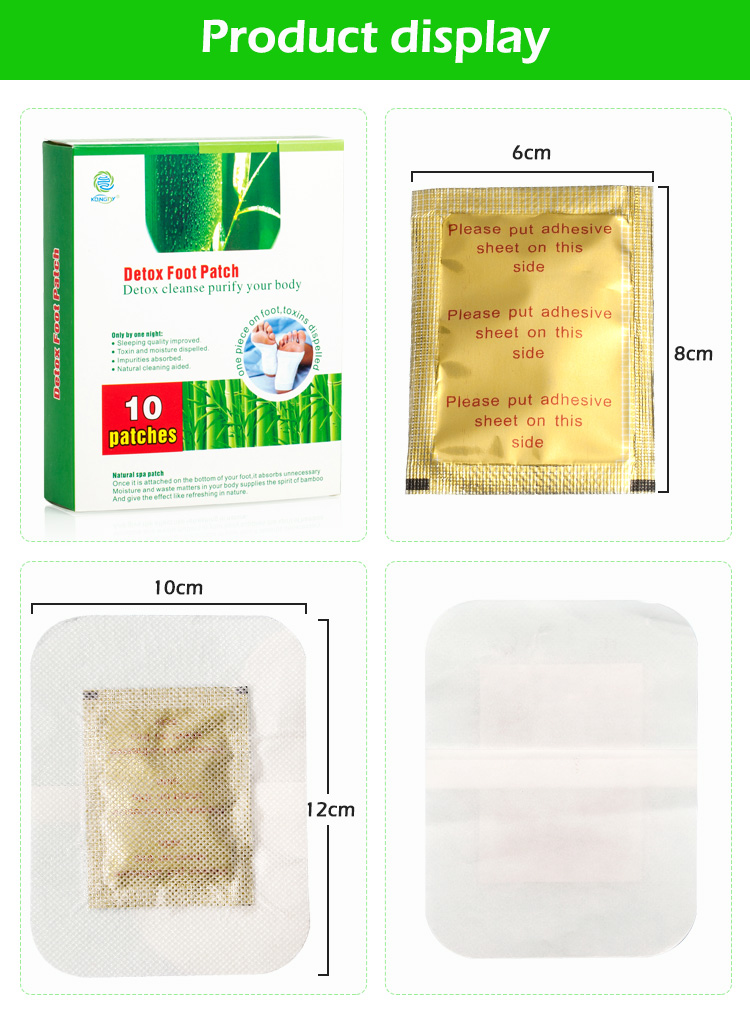
The cost of producing Bamboo Foot Detox Patches typically includes several key components:
Raw materials (bamboo vinegar, bamboo charcoal, herbal powders)
Manufacturing and labor
Quality control and testing
Packaging and labeling
Logistics and compliance
Natural bamboo-based ingredients often cost more than synthetic alternatives, but they are central to product positioning. A professional Bamboo Foot Detox Patches Supplier helps brands manage these costs through optimized sourcing and efficient production workflows.
Consumers purchasing detox patches are not only buying functionality—they are buying a wellness philosophy. Bamboo-based materials offer strong value drivers:
Bamboo is renewable and eco-friendly
Bamboo vinegar aligns with traditional wellness concepts
Natural ingredients support clean-label branding
This perceived value allows brands to justify higher retail pricing, offsetting higher production costs. For this reason, experienced Bamboo Foot Detox Patches Manufacturer partners focus on sourcing stable, high-quality natural materials rather than competing solely on price.
Custom Bamboo Foot Detox Patches typically involve higher upfront costs due to formulation development and testing. However, they offer:
Strong product differentiation
Higher pricing flexibility
Long-term brand asset creation
Over time, custom OEM products often deliver better margins because they are less price-sensitive and harder for competitors to replicate.
Private Label Bamboo Foot Detox Patches use pre-developed formulas, reducing R&D expenses and enabling faster market entry. This model offers:
Lower initial investment
Predictable cost structures
Faster cash flow
While margins may be slimmer due to competition, private label remains attractive for startups and brands focused on volume sales.
A capable Bamboo Foot Detox Patches OEM partner balances cost and value through:
Bulk raw material purchasing
Standardized production lines
Efficient labor allocation
Scalable order planning
Rather than reducing ingredient quality, reliable manufacturers focus on operational efficiency to protect both product integrity and brand margins.
Profitability depends heavily on supplier selection. A trustworthy Bamboo Foot Detox Patches Supplier provides:
Transparent pricing
Consistent ingredient quality
Flexible MOQ options
Cost-optimization advice
The cheapest supplier often leads to higher long-term costs through quality issues, returns, or reputational damage.
Balancing cost and value in Bamboo Foot Detox Patches OEM is not about choosing the lowest price—it’s about making smart manufacturing decisions. By working with an experienced Bamboo Foot Detox Patches Manufacturer, brands can leverage natural bamboo materials to create high perceived value while maintaining healthy profit margins. Whether choosing Custom Bamboo Foot Detox Patches or Private Label Bamboo Foot Detox Patches, the right strategy transforms cost into competitive advantage.
1. Are natural bamboo ingredients more expensive?
Yes, but they support premium positioning and higher retail pricing.
2. Do Custom Bamboo Foot Detox Patches offer better margins?
Often yes, due to differentiation and pricing flexibility.
3. Is private label more cost-effective for new brands?
Yes, it reduces upfront investment and speeds up market entry.
4. How do OEM manufacturers control costs without reducing quality?
Through process efficiency, bulk sourcing, and standardized production.
5. What role does a Bamboo Foot Detox Patches Supplier play in profitability?
They influence material quality, pricing stability, and production efficiency.
6. Is choosing the cheapest manufacturer a good idea?
No—lower prices often lead to quality and compliance risks.

